🟦 1. The Event (FACT)
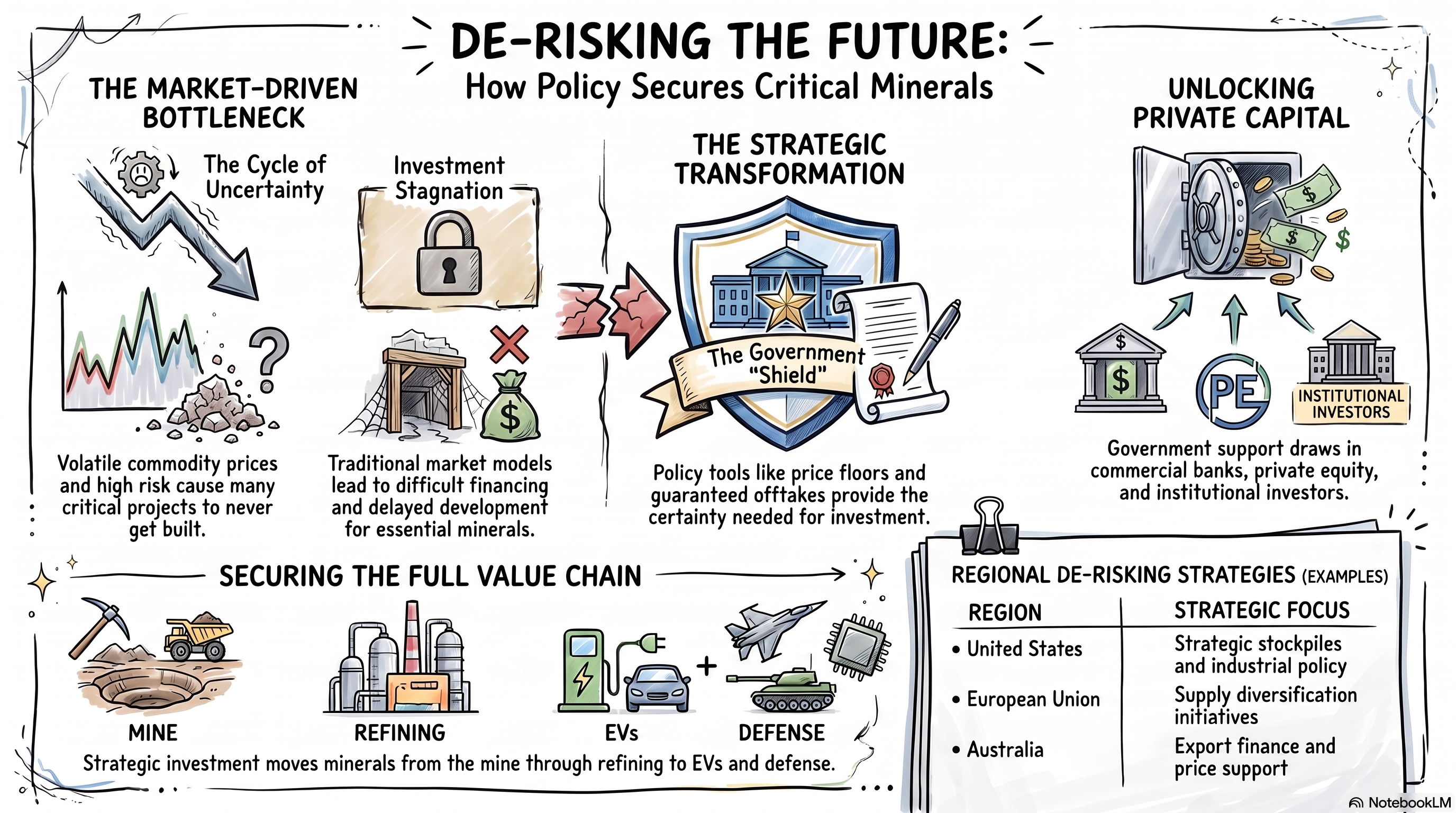
Australia is considering introducing price floors for critical minerals, including rare earths, backed by Export Finance Australia, to support domestic producers and attract foreign investment into mining and processing. The policy discussion was announced by Australia’s Resources Minister at a critical minerals summit in Washington this week.
🟨 2. Affected Channels (MECHANISM)
Supply: Incentives for non-China critical mineral production and processing
Financing: Government-backed price floors and export credit support
Trade / Logistics: Potential shift in global sourcing away from China
Regulation: Increased state intervention in critical minerals markets
🟩 3. Malaysia Exposure (WHO)
Exposed sectors: Electronics & electrical manufacturing, semiconductors, renewable energy, automotive components, defence-related manufacturing
Company types: Malaysian manufacturers dependent on imported rare earths and critical minerals
Geographic relevance: Malaysia as a downstream processing and manufacturing hub in Asia, reliant on diversified upstream mineral supply
🟧 4. What to Watch (SIGNALS)
Changes in sourcing patterns of rare earths and critical minerals by Malaysian manufacturers
New offtake agreements or supply partnerships involving Australian producers
Trade or industrial policy responses related to critical minerals security
Increased corporate disclosures on supply-chain diversification strategies
How to Interpret Australia’s Action
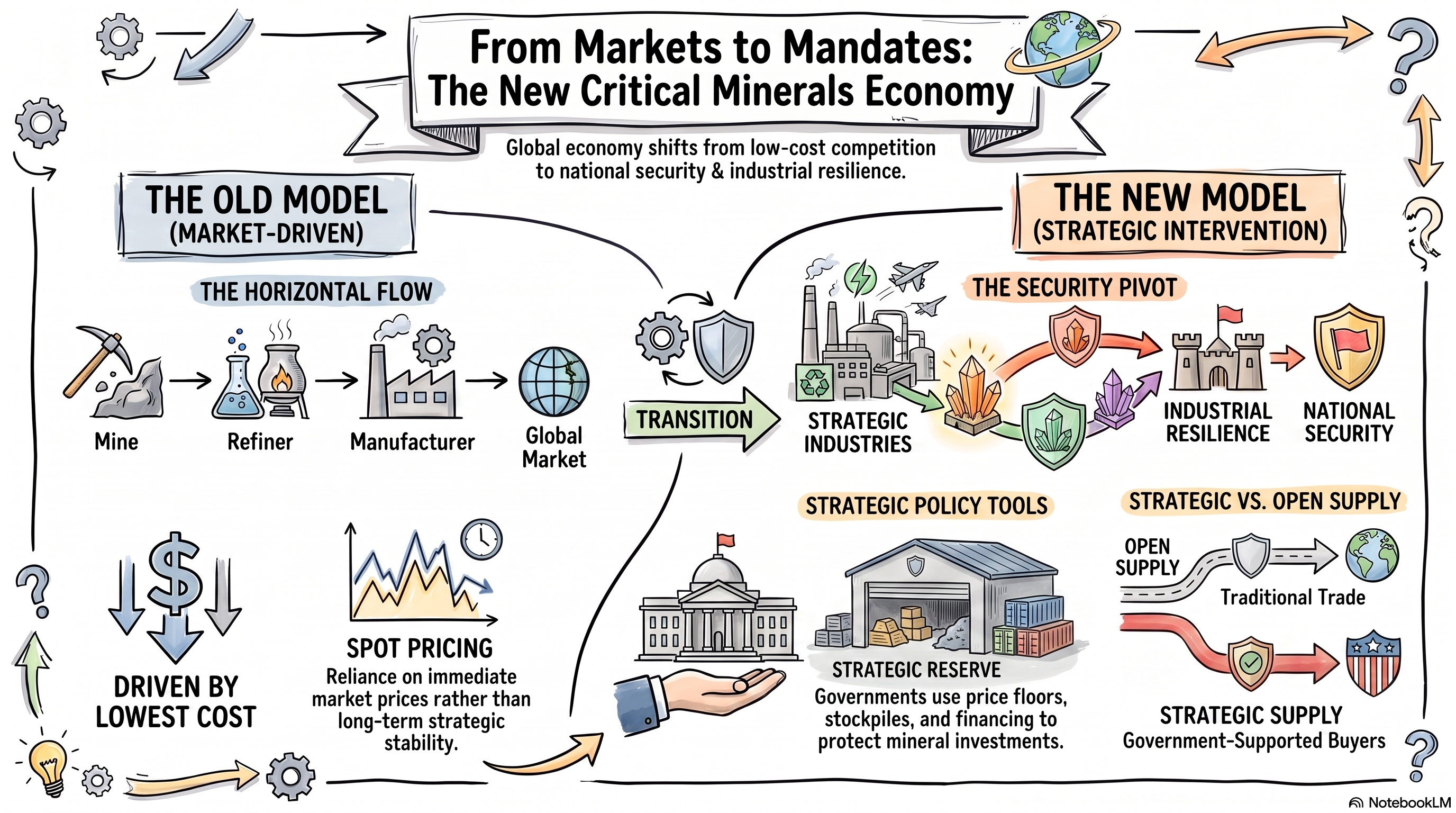
1. China’s dominance is being attacked on price, not volume
China doesn’t just dominate rare earths because of reserves — it dominates because it can:
Flood the market
Drive prices below marginal cost
Kill non-Chinese projects before they reach scale
A price floor neutralises China’s most effective weapon: predatory pricing.
This is essentially saying:
“If market prices collapse, the Australian state will underwrite a minimum return.”
That’s a regime shift.
2. Export Finance Australia becomes a strategic weapon
Export credit agencies used to:
Support exporters
Now they are being used to:De-risk upstream resource investments
Crowd in foreign capital
Anchor long-term offtake agreements
This turns EFA into a quasi-sovereign balance sheet for minerals, similar to how China used policy banks for decades.
3. Australia is aligning itself explicitly inside the US-led supply chain
This is not neutral industrial policy.
Timing matters:
Trump launches Project Vault (US$12bn)
Australia responds within days
EU proposes minerals alliance with the US
We’re watching the formal fragmentation of global commodity markets into:
China-aligned supply chains
US / ally-aligned supply chains
Critical minerals are no longer “commodities” — they’re strategic assets.
Expected Policy Follow-Through
You should expect more than just talk:
Near-term (6–12 months)
Pilot price floor for select rare earths only (NdPr most likely)
Government-backed offtake agreements
Financing tied to processing, not just mining
Medium-term (12–36 months)
Expansion to antimony, gallium, possibly lithium chemicals
Conditional support: ESG + non-China processing requirements
Coordination with US stockpiles (joint purchasing)
This won’t be a free lunch — compliance will be strict.
Who Are the Direct Beneficiaries
1. Australian rare earth producers
Especially:
Lynas – already operational, non-China processing
Iluka – downstream exposure
Arafura – project economics improve materially
Sunrise Energy Metals – higher-risk, higher beta
Price floors disproportionately benefit high-cost producers, which is exactly the point.
2. Midstream processors
Mining isn’t the real choke point — processing is.
Any company involved in:
Separation
Refining
Magnet production
gets a double tailwind:
Higher price certainty
Strategic importance premium
This is where future valuations will surprise people.
3. Foreign investors who want political risk protection
For:
Japanese trading houses
US defence-linked manufacturers
European industrials
Australia is basically saying:
“We’ll socialise downside risk if you help us build supply.”
That’s extremely investable capital.
Who Loses
China
Not immediately, but structurally:
Loses ability to weaponise low prices
Forced to defend margins instead of crushing competitors
Faces parallel supply chains it doesn’t control
This is erosion, not collapse — but it’s real.
Pure free-market commodity traders
Price floors reduce volatility on the downside.
That compresses:
Trading spreads
Arbitrage opportunities
Expect more policy-driven price behaviour, less pure supply-demand.
What Can Investors Actually Do
Equity investors
Rotate from exploration-only to near-production + processing
Favour jurisdictions aligned with US/EU
Expect valuation rerating, not just earnings growth
This is a multiple expansion story, not just cash flow.
Commodity investors
Critical minerals now have a policy floor + geopolitical premium
Treat them more like uranium post-Fukushima than iron ore
Expect less mean reversion
Strategic / corporate players
Lock in offtake agreements early
Co-invest alongside sovereign-backed vehicles
Don’t wait for spot prices — access > price now
One Hard Truth
This will distort markets.
Some projects that shouldn’t exist economically will survive because they’re strategically useful. That means:
Higher end-user costs
Potential inefficiencies
Political risk replacing market risk
But from a state’s perspective, that’s acceptable.
Bottom Line
Australia is no longer asking:
“Is this project profitable?”
It’s asking:
“Is this project strategically necessary?”