🟦 1. The Event (FACT)
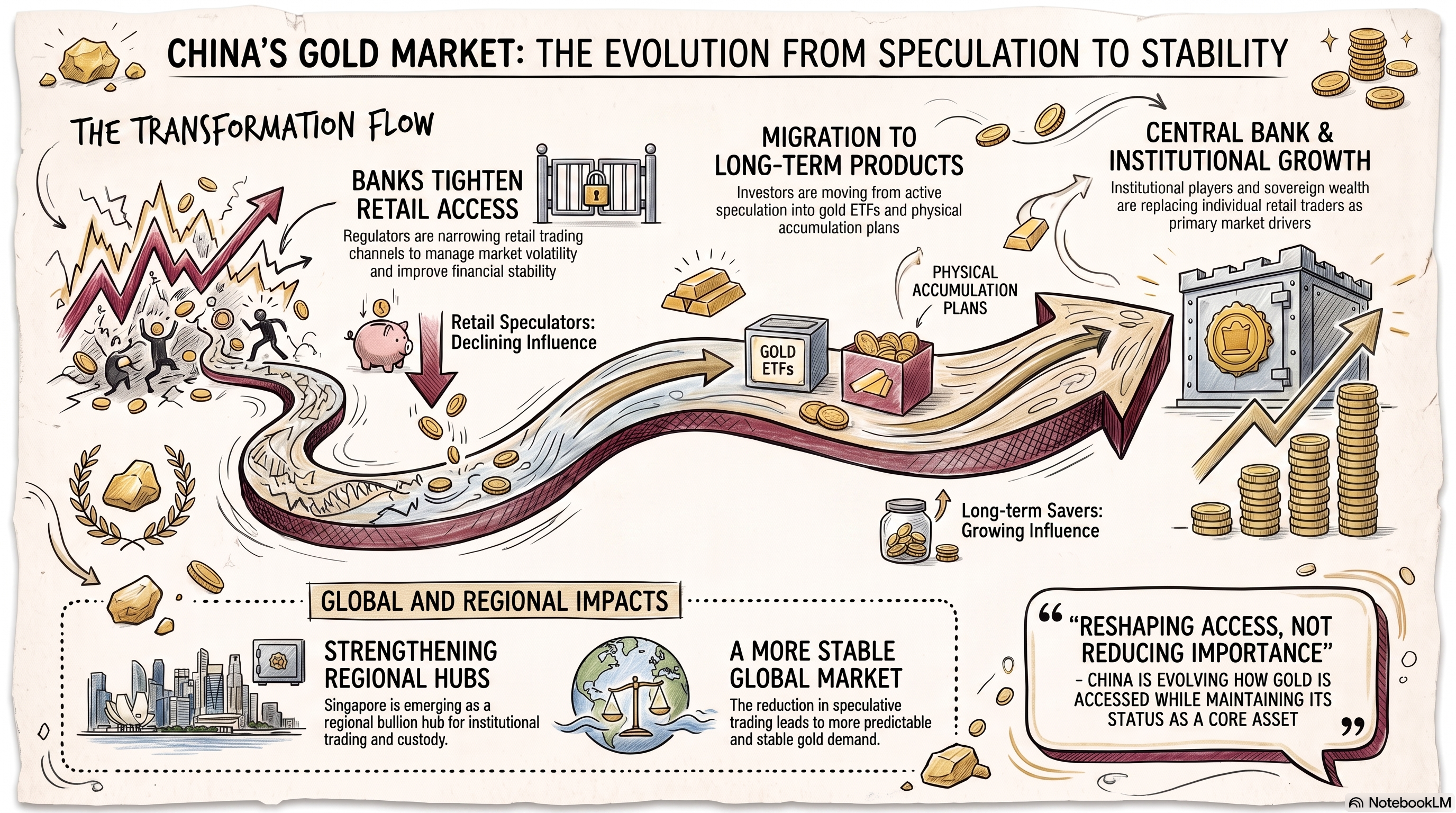
Several major Chinese banks, including Industrial & Commercial Bank of China (ICBC) and China Guangfa Bank, are discontinuing retail intermediary services for precious metals trading on the Shanghai Gold Exchange. The move, announced in July 2026, is part of broader risk management measures following heightened volatility and a reversal in gold and silver prices.
🟨 2. Affected Channels (MECHANISM)
Regulation: Banks are tightening controls over retail access to precious metals trading.
Demand: Retail participation in spot and deferred precious metals trading may decline.
Sentiment: Reflects increased risk management amid volatile precious metals markets.
Financing: Retail investors may shift towards alternative investment products such as gold ETFs and gold accumulation plans.
🟩 3. Malaysia Exposure (WHO)
Exposed sectors
Banking
Precious metals
Wealth management
Gold trading
Capital markets
Types of Malaysian companies
Commercial banks offering investment products.
Gold bullion dealers and precious metals traders.
Asset management companies with gold-related funds or ETFs.
Securities brokers facilitating commodity-related investments.
Wealth management providers.
Geographic relevance
Malaysia is indirectly exposed through regional investor sentiment and developments in the Asian precious metals market.
🟧 4. What to Watch (SIGNALS)
Further restrictions on retail precious metals trading by Chinese financial institutions.
Changes in trading volumes on Chinese precious metals exchanges.
Flows into gold ETFs and gold accumulation products.
Precious metals price volatility and trading activity.
Regulatory guidance on retail commodity investment in major Asian markets.
Malaysian financial institutions' product offerings and investor demand for gold-related investments.
Cross-border capital flow trends into alternative precious metals investment vehicles.
China's withdrawal of bank-supported retail gold trading marks the end of speculative participation, not the end of the gold market
2. Executive Summary
Major Chinese banks are shutting down retail intermediary services for precious metals trading, completing a multi-year effort to reduce speculative retail participation in gold and silver markets.
This is primarily a financial stability and risk-management measure, not a bearish policy on gold itself. Importantly, long-term investment channels such as gold accumulation plans and gold ETFs remain available.
The move reflects China's broader regulatory philosophy of discouraging leveraged or speculative retail trading while encouraging longer-term household wealth preservation.
For global markets, the immediate impact on gold demand is likely to be modest because retail speculative activity had already been significantly curtailed since 2022. The more important implication is a structural shift in the composition of gold demand—from short-term traders toward central banks, institutional investors, and long-term savers.
3. Key Insights
Insight 1: China is eliminating speculative access, not investment access
Observation
Banks are ending intermediary services for trading on the Shanghai Gold Exchange, while still allowing gold accumulation products and gold ETFs.
Why it matters
The policy distinguishes between speculation and long-term wealth accumulation, indicating that regulators are targeting market volatility rather than discouraging gold ownership itself.
Second-order implication
Household gold demand may become more stable and less sensitive to short-term price movements.
Third-order implication
China's gold market increasingly resembles a savings vehicle rather than a speculative trading market.
Insight 2: Financial stability is taking priority over market activity
Observation
Banks consistently cited risk management, following several years of tighter restrictions on precious metals trading.
Why it matters
The decision fits China's broader pattern of limiting retail participation in highly volatile financial products.
Second-order implication
Chinese banks reduce operational, compliance, and reputational risks associated with retail commodity speculation.
Insight 3: The composition of global gold demand continues to evolve
Observation
Retail speculative trading channels are shrinking, while institutional and long-term investment channels remain open.
Why it matters
Gold demand increasingly depends on:
Central banks
Sovereign reserve managers
Institutional investors
Long-term retail savers
rather than short-term speculative traders.
Third-order implication
Gold prices may become somewhat less influenced by Chinese retail momentum and more by macroeconomic and geopolitical factors.
Insight 4: China's financial regulators are encouraging "productive capital"
Observation
Speculative commodity trading is becoming less accessible.
Why it matters
Chinese policymakers have increasingly sought to redirect household savings toward areas considered more aligned with long-term financial stability and economic development.
Second-order implication
Capital may gradually shift toward diversified investment products rather than high-frequency commodity speculation.
Insight 5: This is the final stage of a multi-year regulatory process
Observation
Restrictions on opening new positions have existed since 2022.
Why it matters
The latest announcements complete a regulatory tightening that has been unfolding for several years, suggesting this is not an emergency response to recent price declines.
Second-order implication
Markets are unlikely to experience a major shock because speculative retail participation had already diminished.
Insight 6: Gold's structural investment case remains intact
Observation
Banks continue offering long-term gold accumulation products.
Why it matters
Regulators appear to view gold as an acceptable savings asset while discouraging leveraged or short-term trading.
Third-order implication
Long-term household participation in gold is likely to continue even as speculative turnover declines.
4. Interpretation
What is really happening beneath the headlines?
China is changing the way households own gold, not eliminating their exposure to it.
This reflects a broader regulatory philosophy seen across multiple asset classes over recent years:
Reduce leverage.
Limit speculative retail trading.
Encourage long-term savings.
Improve financial stability.
The timing coincides with a correction in gold prices following the easing of geopolitical tensions and expectations of higher interest rates. Rather than allowing retail investors to increase exposure during a volatile period, banks are withdrawing intermediary services that facilitate active trading.
Importantly, this does not represent a reversal of China's broader support for gold ownership. Gold accumulation plans and ETFs remain available, indicating that regulators continue to accept gold as a long-term store of value while discouraging speculative activity.
5. What Changes Next?
Next 6 Months
Likely (80%)
Remaining retail positions are closed or transferred to alternative platforms.
Gold accumulation plans continue attracting long-term savers.
Overall Chinese retail trading volumes in precious metals decline.
Possible (45%)
Additional guidance on risk management for commodity investment products.
Brokerages see modest increases in futures account openings from investors seeking alternative trading access.
Low Probability, High Impact (15%)
Broader tightening across other speculative commodity trading channels if volatility increases sharply.
Next 12 Months
Likely (70%)
Institutional investors account for a larger share of Chinese gold market activity.
Banks expand long-term wealth products linked to precious metals.
Retail participation shifts toward ETFs and accumulation plans.
Next 3 Years
Likely (75%)
China's gold market becomes increasingly dominated by long-term investment rather than speculative trading.
Regulatory oversight of retail commodity investing remains stringent.
The composition of demand continues shifting toward institutional and sovereign buyers.
6. Winners
Direct Winners
Industries
Gold ETF providers
Gold accumulation product providers
Wealth management platforms
Precious metals custodians
Institutions
Commercial banks offering long-term savings products
Brokerages providing diversified investment solutions
Secondary Winners
Institutional asset managers
Central banks (through a relatively more stable market structure)
Long-term investors benefiting from reduced speculative volatility
7. Losers / Pressure Points
Retail speculative traders
Lose convenient access to bank-supported precious metals trading.
Nature: Structural, as the regulatory direction has been consistent since 2022.
Banks' trading-related services
Fee income from retail precious metals trading may decline.
Short-term liquidity
Trading activity on certain retail channels may decrease, though alternative access through brokerages remains available.
8. Investment Implications
Equities
Opportunities
Wealth management firms
ETF providers
Financial institutions focused on long-term investment products
Risks
Businesses dependent on retail trading activity
Private Equity
Potential investment themes:
Digital wealth management
Precious metals custody
Long-term savings platforms
Infrastructure
Limited direct impact.
Venture Capital
Opportunities in:
Digital investment platforms
Portfolio management tools
Financial education technologies
Commodities
Watchlist
Gold
Silver
Gold ETF flows
Central bank gold purchases
Fixed Income
No meaningful direct implication, though reduced speculative activity may support broader financial stability.
Currencies
Limited direct impact on the renminbi.
Real Assets
No material implication beyond continued support for physical gold ownership through long-term savings products.
9. Malaysia / ASEAN Implications
Malaysia
Limited direct impact on Malaysia's financial system.
Jewellery retailers and bullion dealers are unlikely to see material changes from this policy alone.
Malaysian investors should recognize that China's long-term demand for gold remains supported even as speculative channels narrow.
Singapore
As a regional bullion trading and wealth management hub, Singapore could benefit marginally if some sophisticated investors seek offshore trading or custody solutions.
Strong institutional gold infrastructure remains an advantage.
Indonesia
Minimal direct impact.
Thailand
Limited impact beyond broader regional sentiment toward precious metals.
Vietnam
Retail affinity for gold remains driven primarily by domestic factors rather than China's regulatory changes.
10. Long-Term Structural Trend
Megatrend | Assessment | Why |
Financial stability | Strongly reinforces | China continues reducing speculative retail financial activity. |
Institutionalisation of markets | Strongly reinforces | Market participation shifts from retail traders toward institutional and long-term investors. |
Multipolar financial system | Moderately reinforces | Gold remains an important reserve and savings asset despite tighter trading rules. |
Financial fragmentation | Weakly reinforces | China's market structure continues to diverge from more liberal financial systems. |
Industrial policy | Neutral | Primarily a financial regulatory measure. |
Resource nationalism | Neutral | No direct effect on commodity production or exports. |
AI infrastructure | Neutral | No direct connection. |
Energy transition | Neutral | No material implication. |
Friend-shoring | Neutral | No meaningful impact. |
Re-industrialisation | Neutral | Not directly relevant. |
11. Hidden Insights
This is not an anti-gold policy. The continued availability of gold accumulation plans and ETFs indicates that regulators differentiate between speculative trading and long-term ownership.
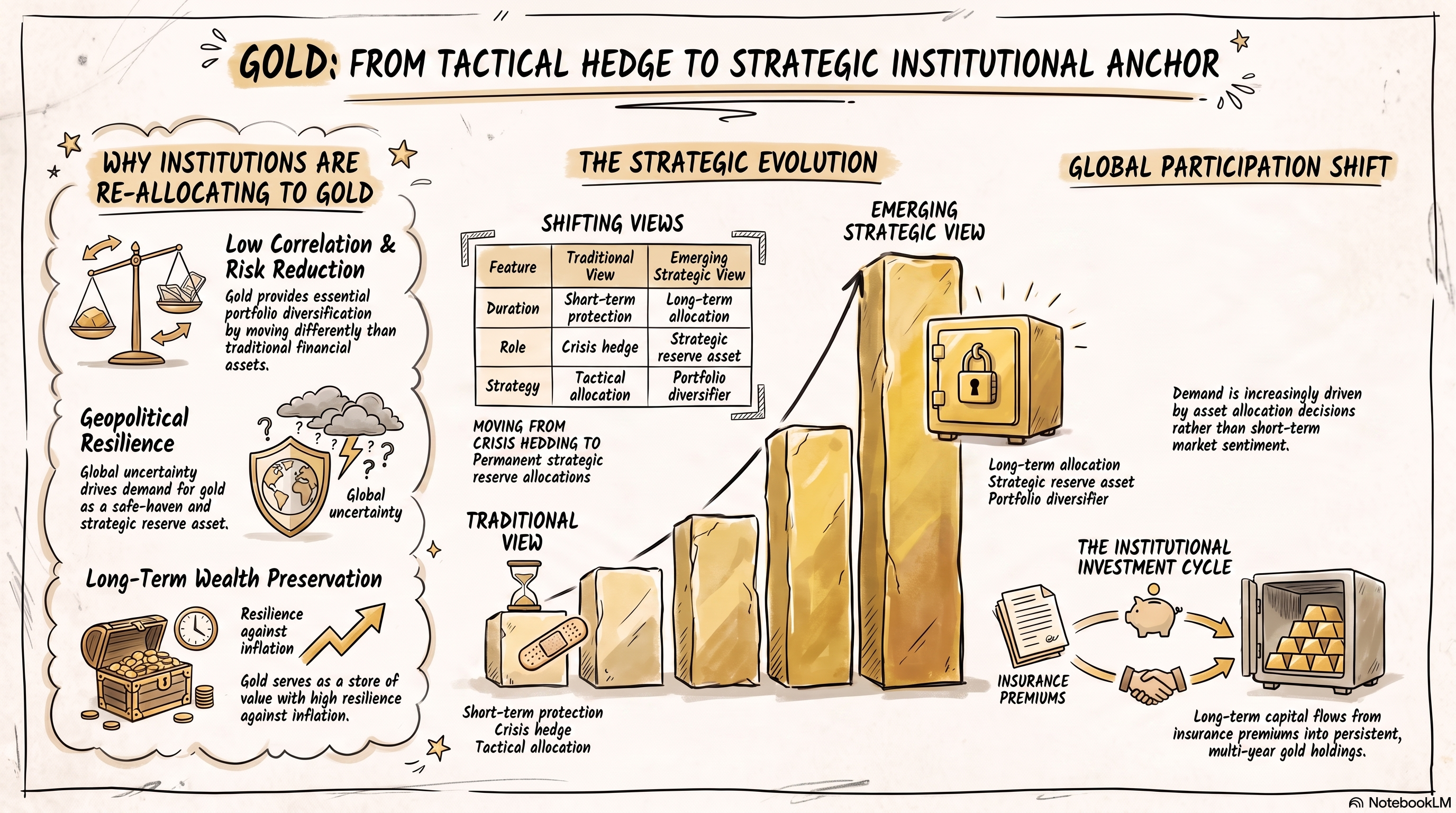
The demand mix matters more than headline demand. Even if total retail trading falls, institutional investors, central banks, and long-term savers could become an even larger share of the gold market, potentially making demand more resilient.
China is applying a consistent regulatory template. Similar to earlier actions in property, online finance, and leveraged investing, policymakers are reducing channels that encourage rapid retail speculation while preserving longer-term investment options.
The impact on global gold prices is likely to be limited. Because banks had already restricted new retail positions since 2022, much of the speculative activity had already migrated or declined. This latest step completes an existing policy trajectory rather than introducing a new one.
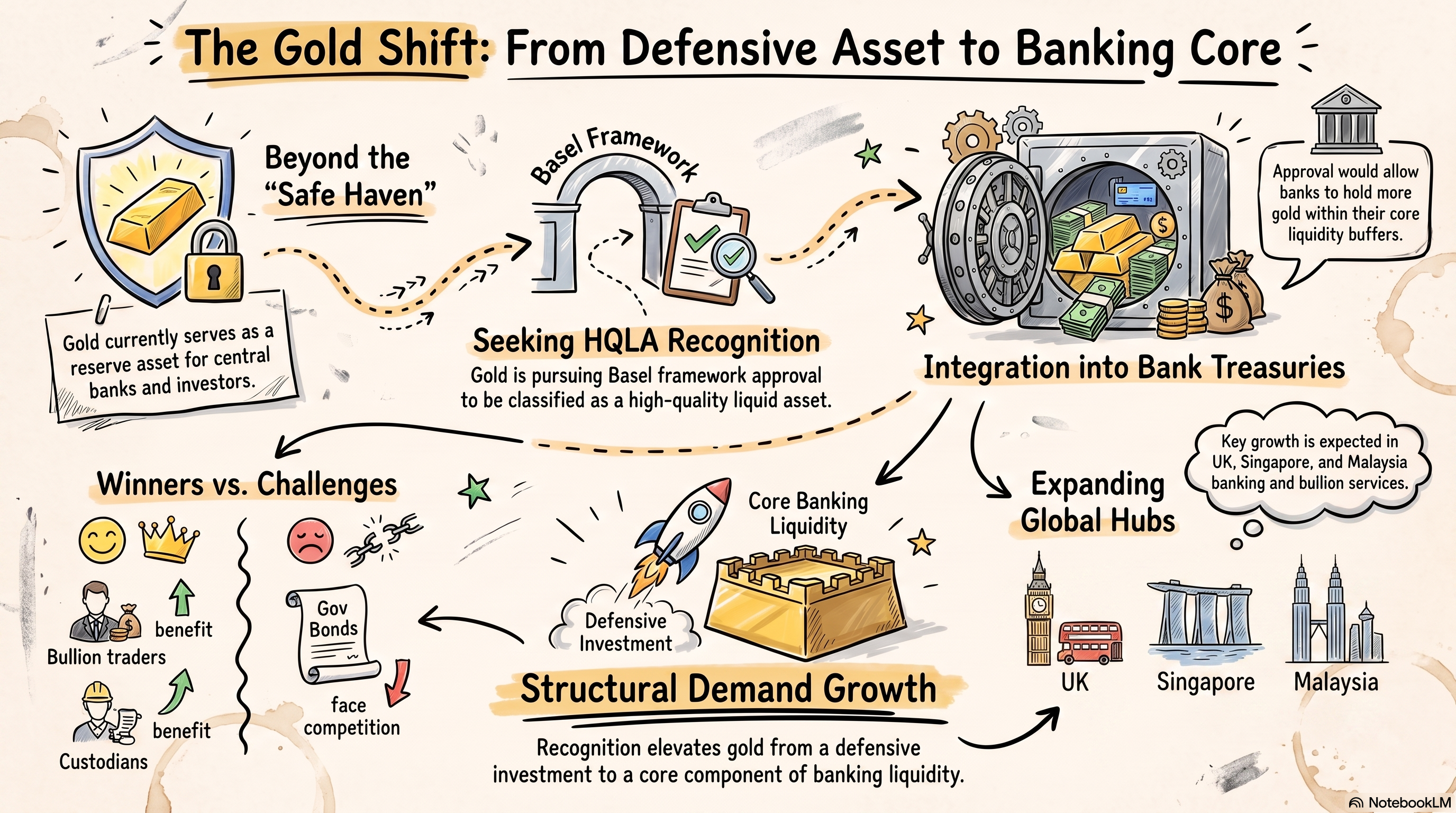
This complements, rather than contradicts, efforts to elevate gold's role in the financial system. While Chinese banks are limiting speculative retail trading, international discussions around recognizing gold as a high-quality liquid asset (HQLA) focus on institutional and banking uses of gold. Together, these trends point toward gold becoming more institutionalized and less speculative, rather than less important overall.
12. Signals to Monitor
Bullish Confirmation
Continued growth in Chinese gold accumulation plans and gold ETF assets.
Sustained central bank gold purchases globally.
Stable or rising physical gold demand despite reduced retail trading activity.
Expansion of institutional gold products.
Bearish Confirmation
Sharp declines in overall Chinese physical gold demand.
Significant outflows from gold ETFs and long-term savings products.
Further regulatory restrictions extending to long-term gold investment products.
Invalidation Signals
Chinese regulators unexpectedly prohibit or severely restrict gold accumulation plans and gold ETFs, indicating a broader policy shift away from gold ownership.
Major commercial banks reintroduce speculative retail precious metals trading services, reversing the current regulatory direction.
A sustained collapse in institutional and central bank demand offsets long-term investment flows, fundamentally weakening gold's structural demand base.
13. Bottom Line
China's major banks are completing a multi-year transition away from facilitating retail precious metals speculation, rather than abandoning gold as an asset class.
The policy strengthens financial stability by steering investors toward longer-term investment channels while reducing exposure to volatile trading.
The immediate impact on global gold demand is likely to be modest because retail trading restrictions have been in place since 2022.
The more significant structural shift is that gold demand is becoming increasingly institutional—driven by central banks, wealth management products, ETFs, and long-term savers instead of short-term retail traders.
This trend is broadly consistent with other global developments, including discussions on expanding gold's role within the banking system through potential HQLA recognition.
For investors, the key question is not whether Chinese retail trading declines, but whether long-term institutional demand continues to strengthen. If it does, gold's role in the global financial system may become more strategic even as speculative participation diminishes.