🟦 1. The Event (FACT)
China will tighten export controls on silver starting in 2026, elevating it to a strategic material on par with rare earths. The move affects silver, tungsten, and antimony, with 44 Chinese companies approved to export under the new rules.
🟨 2. Affected Channels (MECHANISM)
Trade / Logistics: Silver export volumes and sourcing may be restricted
Cost: Higher silver prices globally due to limited Chinese exports
Supply: Industrial supply chains reliant on Chinese silver may face constraints
Sentiment: Investor perception of silver as a safe-haven asset
🟩 3. Malaysia Exposure (WHO)
Exposed sectors: Solar panel manufacturers, electronics, electrical equipment, medical device producers
Company types: Industrial users of silver in circuits, batteries, or solar cells
Geographic relevance: Importers of Chinese silver or silver-containing materials
🟧 4. What to Watch (SIGNALS)
Changes in silver import volumes from China to Malaysia
Price movements in silver and related industrial inputs
Corporate announcements on sourcing alternatives or cost adjustments
Stockpile or procurement activity by Malaysian manufacturers using silver
1. What’s happening
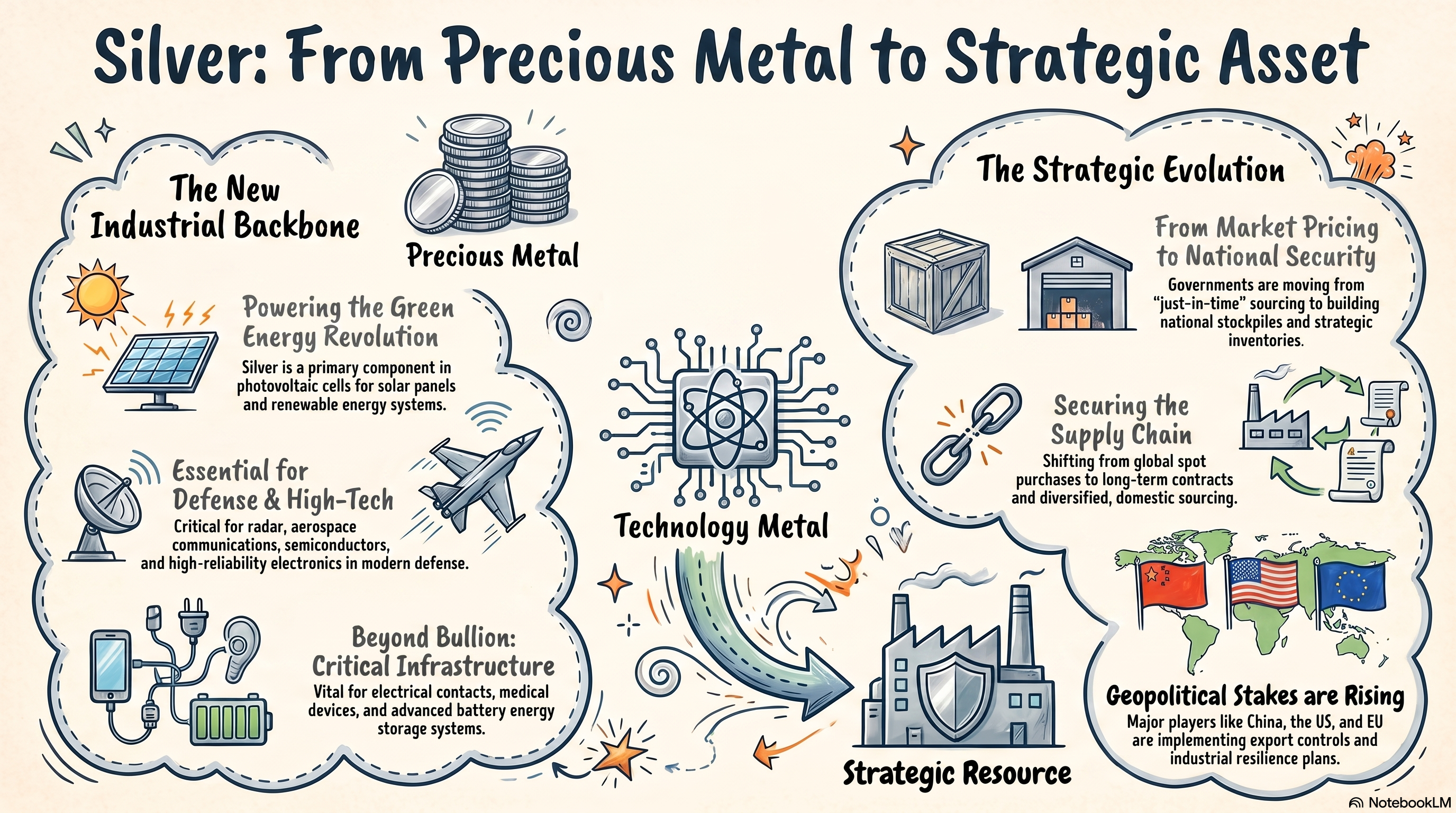
China is tightening controls on silver exports, effectively elevating it from a standard commodity to a strategic material, similar to rare earths.
The policy is not a blanket ban, but export permits are now limited to 44 approved companies in 2026–2027.
Other metals like tungsten and antimony are also included in this strategic control list.
Background: China is already the world’s largest silver producer and holds significant reserves.
2. Drivers behind the move
Strategic leverage:
Mirrors China’s approach to rare earths, giving it geopolitical bargaining power in global supply chains.
Silver is critical in defense, electronics, solar panels, and medical applications.
Domestic security and supply stability:
Prioritizing domestic availability amid rising global industrial and investment demand.
Economic hedging:
Rising industrial demand and high silver prices ($73–$80/oz recently) make it lucrative to control exports.
Strengthens China’s influence over industrial supply chains and pricing.
3. Immediate market impact
Price surge:
Silver prices have doubled in 2025, nearing $80/oz.
Industrial and investor demand is intensifying, particularly from North America and India.
Dollar hedge:
A weak U.S. dollar (down ~9.5% in 2025) is encouraging investors to buy silver as a store of value.
Industrial supply strain:
U.S. and other industrial users may face tighter access, especially in electronics, solar, and defense sectors.
4. Medium- to long-term impact
Global industrial supply chains:
Companies using silver in electronics, solar, batteries, and medical devices may face higher costs or sourcing challenges.
Incentive to find alternatives or develop domestic substitutes.
Investment flows:
Silver may become a geopolitical hedge as well as a currency hedge.
Expect volatility and speculative interest from hedge funds and ETFs.
Price premium on permitted exports:
Companies with approved export licenses can capture higher margins.
Potential arbitrage opportunities for traders in permitted vs. restricted markets.
Policy signaling:
Signals China may treat other industrially critical metals as strategic.
Investors and companies may anticipate similar restrictions on lithium, cobalt, or copper.
5. Positive externalities
Domestic industry protection:
Ensures China has sufficient silver for its solar, electronics, and defense sectors, supporting local production and jobs.
Innovation incentive:
Global companies may accelerate silver substitution technologies, e.g., copper or base metals in photovoltaics and electronics.
Market efficiency:
Could encourage more efficient use of silver and recycling in industries worldwide.
6. Stakeholder actions
Industrial users (electronics, solar, medical, defense):
Hedge silver costs or pre-buy to lock in supply.
Explore alternative materials or recycling solutions.
Diversify sourcing outside China where possible.
Investors / Traders:
Monitor China’s approved exporter list for arbitrage opportunities.
Consider silver as a hedge against dollar weakness and geopolitical risk.
Track silver ETFs and derivatives for short-term price momentum plays.
Policy-makers / Governments:
Assess strategic stockpiling of silver for critical industries.
Encourage domestic silver recycling and alternative materials R&D.
✅ Bottom line
China’s move tightens global silver supply, creates upward price pressure, and reinforces its geopolitical leverage.
While industrial users face challenges, investors and approved exporters may benefit from higher prices.
Global markets may accelerate substitution, recycling, and efficiency innovations, similar to the rare earths playbook.