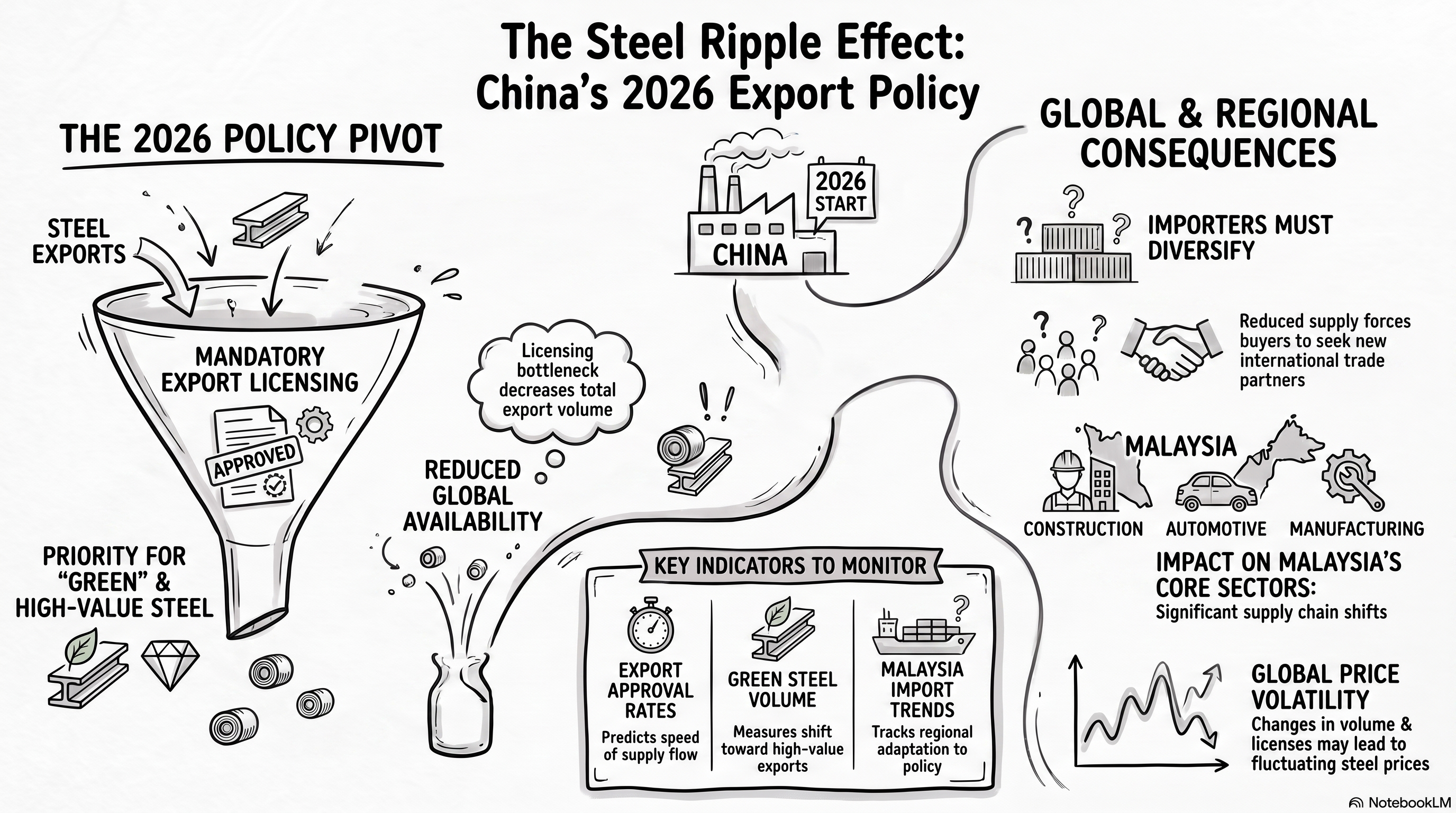
🟦 1. The Event (FACT)
China announced a licensing system for the export of certain steel products starting 1 January 2026, requiring exporters to obtain permission for steel used in construction, automotive, and consumer goods.
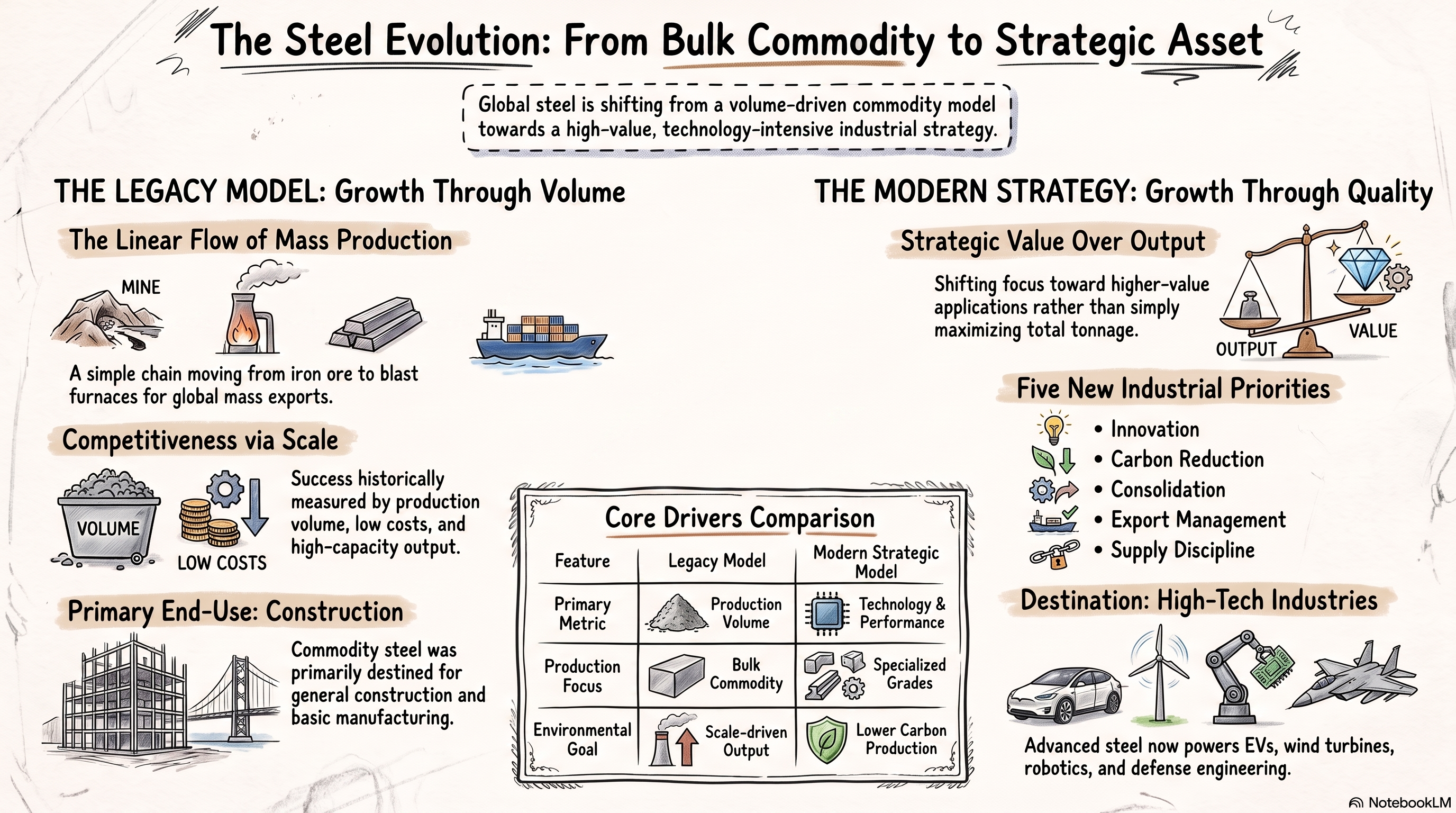
The move follows record steel export volumes in 2025 and coincides with efforts to shift toward higher value-added and “green” steel products.
🟨 2. Affected Channels (MECHANISM)
Trade / Logistics: Export approvals required, potential short-term rerouting of low-value steel
Supply: Reduced availability of certain steel products internationally
Cost: Possible impact on domestic prices due to shifting export patterns
Demand: Importers may adjust sourcing in response to licensing requirements
Sentiment: Market reaction to policy tightening and industrial transition signals
🟩 3. Malaysia Exposure (WHO)
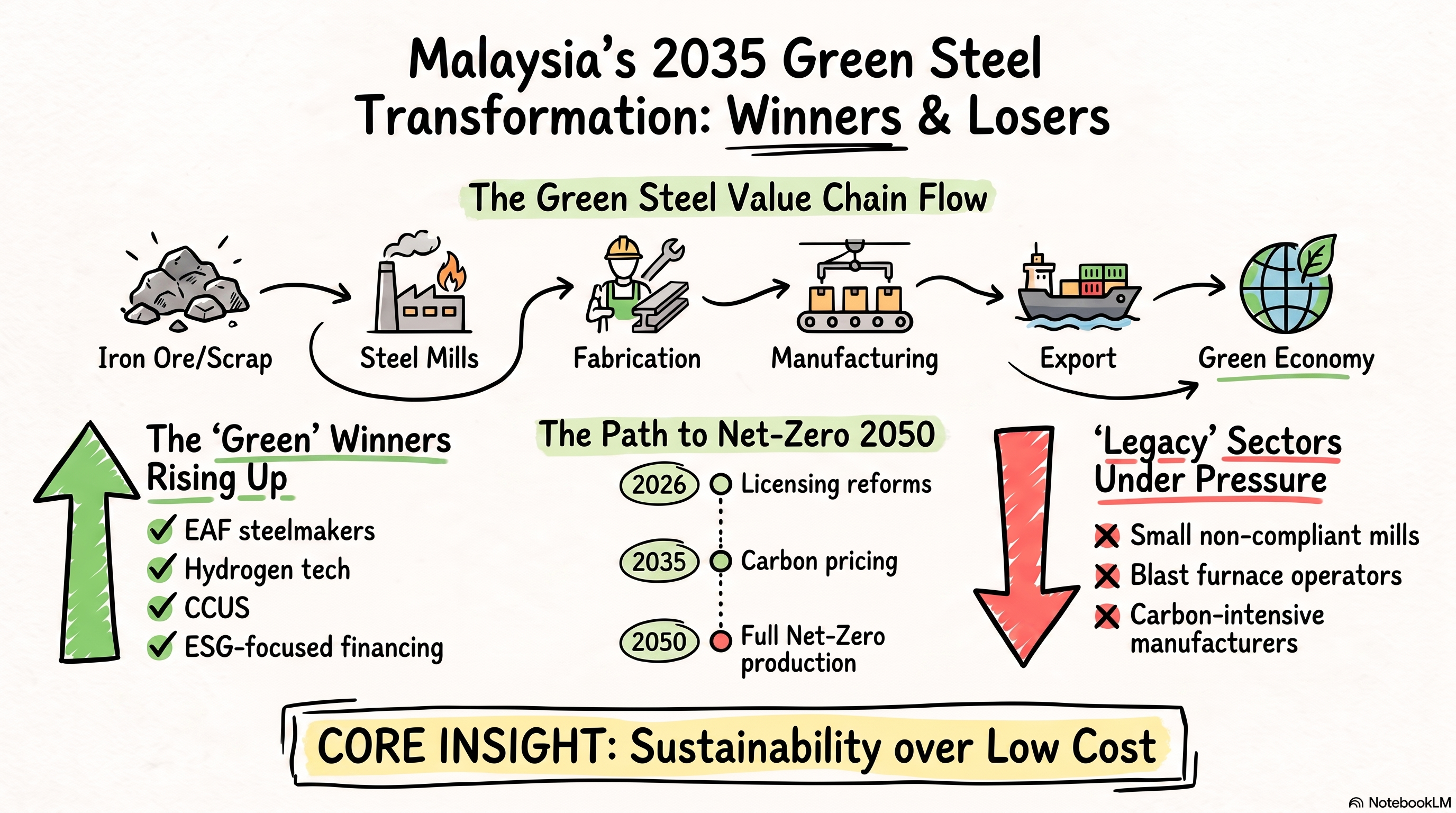
Exposed sectors: Steel manufacturing, construction, automotive, industrial fabrication
Company types: Malaysian steel importers, downstream manufacturers (construction, automotive, machinery), infrastructure developers
Geographic relevance: Nationwide, with higher impact on importers sourcing Chinese steel
🟧 4. What to Watch (SIGNALS)
Changes in import volumes of steel from China to Malaysia
Adjustments in domestic steel pricing and inventory levels
Procurement decisions by construction and automotive firms
Shipping and logistics patterns for steel imports from China
Corporate announcements or contract updates related to higher-value or “green” steel products
1. Overview
China will implement an export licensing system for a broad range of steel products from 1 January 2026, introducing greater regulatory oversight of steel exports. The policy is expected to support industrial upgrading, encourage higher-value steel production, and align the steel industry with China's carbon reduction objectives while strengthening management of export volumes.
2. Key Policy Measures
The new policy introduces several regulatory changes affecting China's steel exports.
Export licenses will become mandatory for a wide range of steel products, including those used in construction, automotive manufacturing, and consumer goods.
The licensing framework provides greater oversight of export activities without introducing formal export quotas.
The policy supports the transition toward higher-value and lower-carbon steel production.
Steel producers are expected to gradually increase the share of advanced and environmentally compliant steel products within their export portfolios.
Lower-value steel products may increasingly be supplied to the domestic market or alternative export destinations.
3. Economic and Industry Impact
The export licensing requirements are expected to influence commodity markets, steel production, and global trade flows.
Steel producers may accelerate investment in higher-value and lower-carbon products to maintain export competitiveness.
Iron ore demand could weaken in the short term if export-oriented steel production slows, potentially affecting iron ore prices.
Global steel markets may experience changes in supply patterns as exports shift toward higher-value products and alternative markets.
Emerging markets could receive a larger share of lower-value steel products, while premium steel exports become increasingly concentrated in higher-value segments.
Downstream industries may experience changes in steel pricing and product availability depending on regional supply adjustments.
4. Strategic Significance
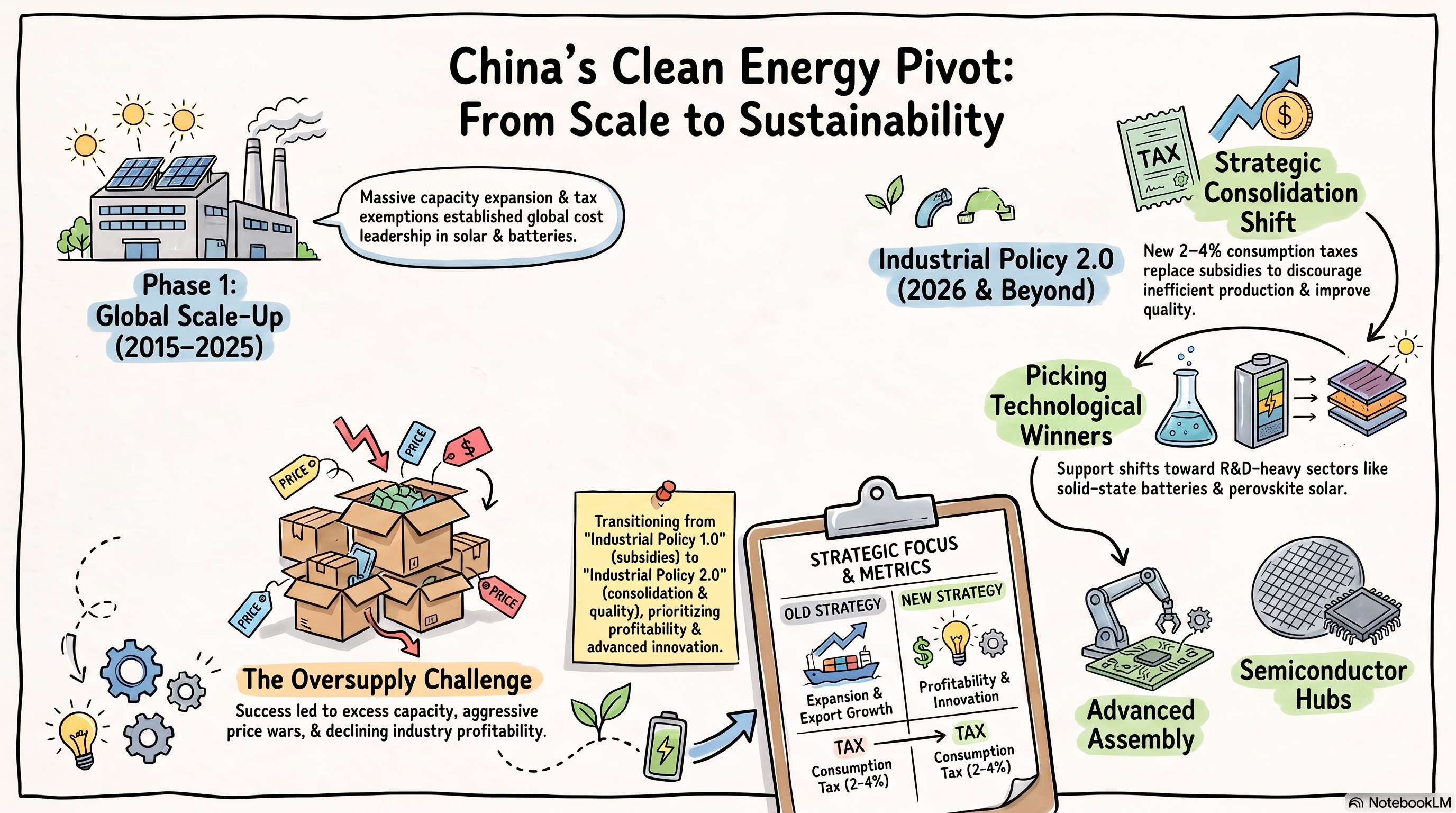
The policy supports China's long-term industrial strategy by promoting higher-quality manufacturing and improving the sustainability of the steel sector.
Key strategic objectives include:
Accelerating industrial upgrading within the steel industry.
Supporting national carbon reduction and green manufacturing targets.
Improving the international competitiveness of Chinese steel exports.
Strengthening oversight of strategic commodity exports.
Encouraging higher value-added manufacturing and export growth.
5. Implementation Considerations
Several factors will influence the effectiveness of the export licensing framework.
Steel producers will need to adjust production strategies to meet evolving export requirements.
Investment in green steel technologies and advanced manufacturing capabilities may increase.
Commodity markets may remain sensitive to changes in Chinese steel production and export activity.
Export licensing procedures may affect shipment timelines and administrative compliance.
Global steel buyers may diversify sourcing strategies as trade flows adjust to the new regulatory framework.
6. Outlook
China's export licensing framework represents a shift toward greater regulatory control over steel exports while supporting higher-value manufacturing and sustainable industrial development. If implemented effectively, the policy could accelerate the transition toward advanced steel production, strengthen environmental performance, and reshape global steel trade patterns, while influencing demand across related commodity markets such as iron ore.