MITI Steel Industry Roadmap 2035: How Malaysia's Steel Industry Will Transform Over the Next Decade
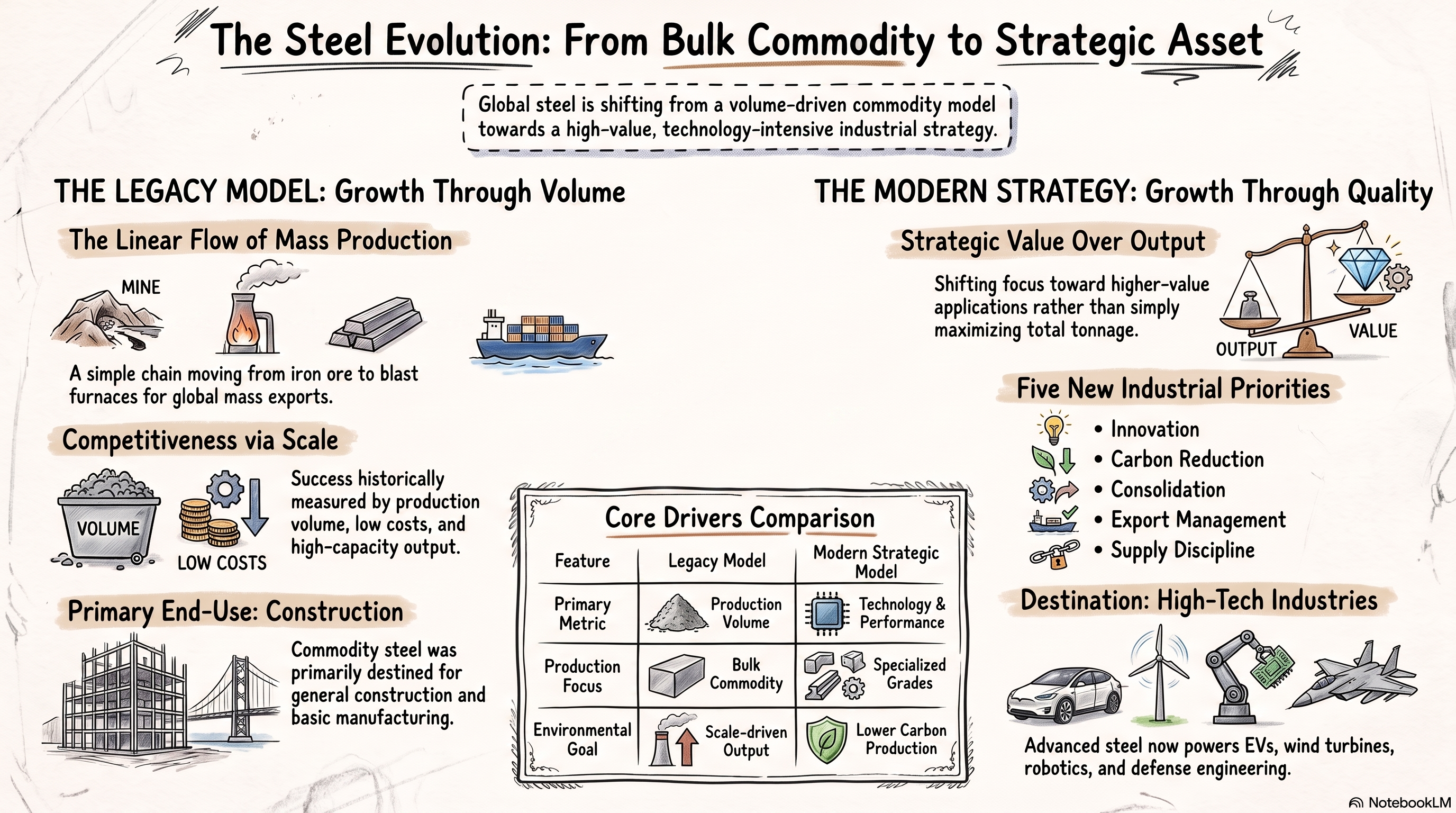
Malaysia's Steel Industry Roadmap 2035, launched by the Ministry of Investment, Trade and Industry (MITI), marks one of the country's most ambitious industrial transformation strategies. Rather than focusing solely on increasing steel production, the roadmap aims to restructure the industry by improving competitiveness, strengthening domestic supply chains, promoting fair trade, and accelerating the transition towards low-carbon steel production.
The strategy extends beyond 2035, with a long-term objective of achieving net-zero steel production by 2050. As global markets increasingly demand environmentally sustainable products, Malaysia intends to position itself as ASEAN's leading hub for green steel manufacturing. This transformation is expected to influence investment decisions, manufacturing strategies, infrastructure development, and capital allocation across multiple industries.
For businesses and investors, the roadmap provides an early indication of which sectors are likely to experience long-term growth and which business models may become increasingly difficult to sustain.
Key Reforms Introduced Under the MITI Steel Industry Roadmap 2035
The roadmap introduces structural reforms designed to address long-standing challenges within Malaysia's steel industry while preparing local manufacturers for a low-carbon global economy.
One of the most significant changes is the restructuring of manufacturing licences. MITI plans to tighten licensing requirements to address industry overcapacity, improve operational efficiency, and ensure producers comply with higher environmental and operational standards. New steelmaking capacity is expected to face stricter approval requirements, particularly if projects do not align with Malaysia's decarbonisation objectives.
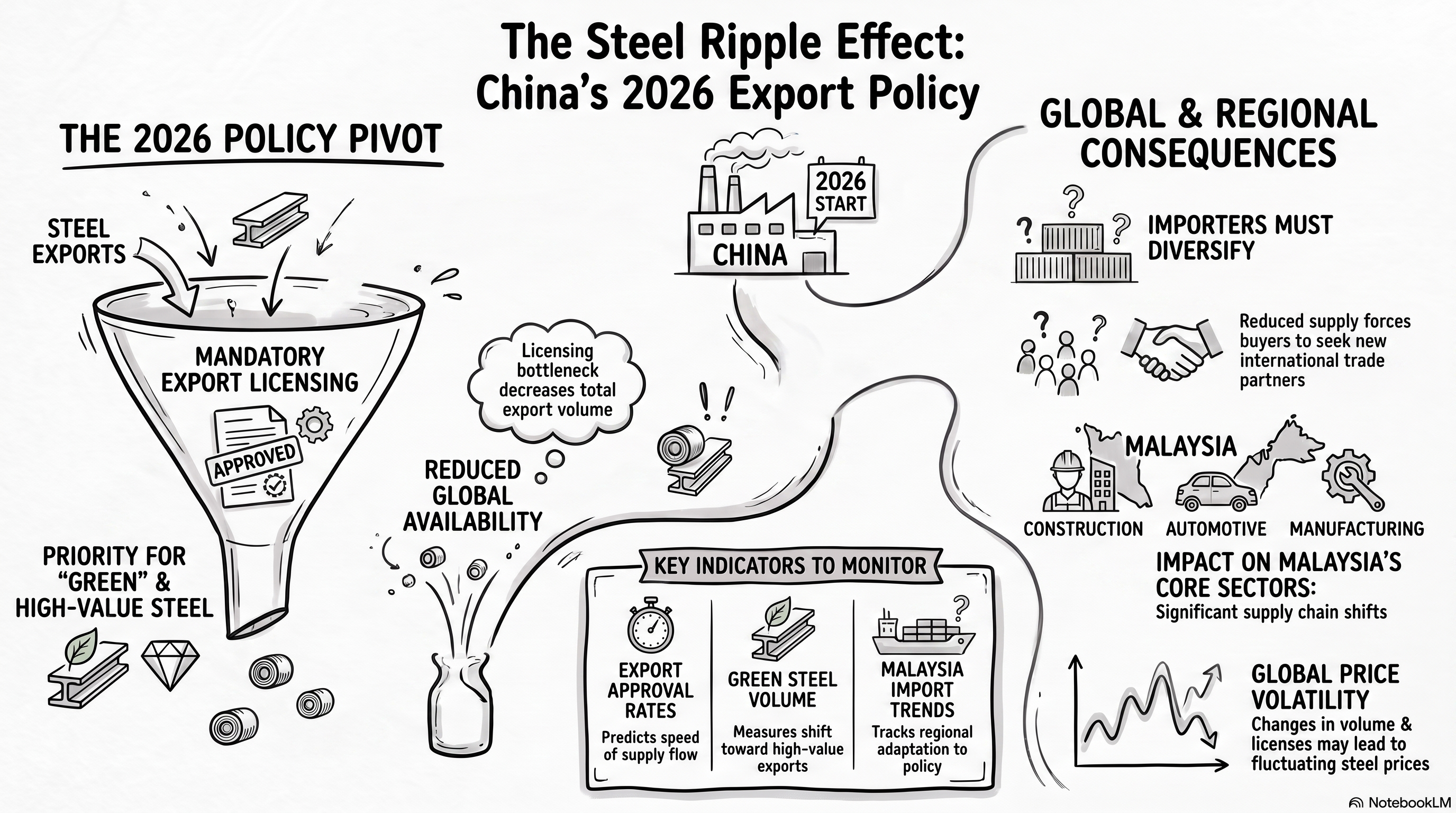
The roadmap also strengthens fair competition by expanding anti-dumping measures and trade enforcement. Authorities intend to crack down on unfair imports, illegal trading activities, and non-compliant operators that have historically placed pressure on domestic steel manufacturers. These measures are expected to improve pricing discipline while creating a more competitive environment for compliant producers.
Another major priority is improving domestic raw material security. Malaysia currently relies heavily on imported iron ore, scrap steel, billets, and semi-finished products. The roadmap encourages greater utilisation of locally sourced iron ore, increased scrap recycling, and investment in domestic supply chains to reduce exposure to international supply disruptions and commodity price volatility.
The transition towards green steel forms the centrepiece of the roadmap. MITI plans to establish green steel certification standards, introduce carbon reduction frameworks, expand renewable energy integration, encourage hydrogen-based steelmaking technologies, and support Carbon Capture, Utilisation and Storage (CCUS). Financial incentives and green financing mechanisms are expected to accelerate investment in cleaner production technologies.
Beyond infrastructure and technology, the roadmap places considerable emphasis on research, innovation, and workforce development. Funding for research and development, Industry 4.0 adoption, digital manufacturing, and technical upskilling will help prepare the industry for increasingly sophisticated production methods.
The strategy also promotes stronger collaboration between steel producers and downstream industries such as automotive manufacturing, construction, shipbuilding, machinery, and heavy engineering. Long-term supply agreements and demand commitments are expected to strengthen Malaysia's industrial ecosystem while supporting domestic manufacturing growth.
Implementation Timeline and Industry Transformation
Implementation will occur in several phases, allowing companies time to adapt while providing long-term policy certainty.
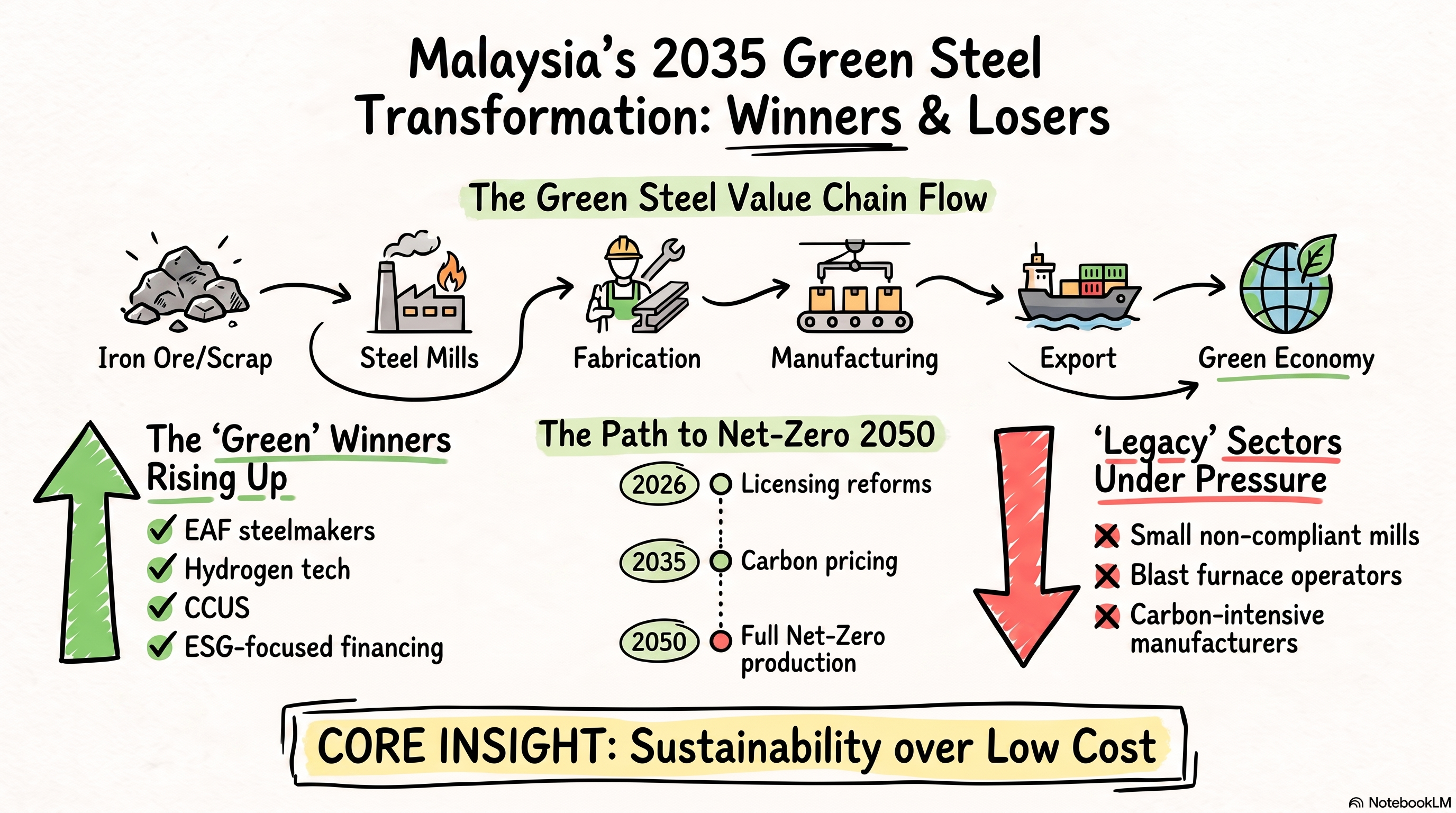
The first phase, covering 2025 to 2026, focuses on regulatory reforms. During this period, MITI will restructure manufacturing licences, strengthen anti-dumping enforcement, crack down on illegal imports, and maintain a moratorium on additional production capacity unless new investments contribute directly to decarbonisation objectives. These reforms are likely to accelerate consolidation as weaker producers struggle to meet stricter compliance standards.
The second phase, spanning 2027 to 2035, shifts towards industrial transformation. Green steel policies are expected to become fully operational alongside carbon pricing mechanisms and closer alignment with international carbon regulations such as the European Union's Carbon Border Adjustment Mechanism (CBAM). Investment in renewable electricity, hydrogen infrastructure, industrial digitalisation, and sustainable financing is expected to increase significantly during this period.
Beyond 2035, the roadmap enters its long-term phase towards 2050, where the objective is complete industrial decarbonisation. Malaysia aims to produce internationally recognised green steel using renewable energy, hydrogen-based production technologies, and low-carbon industrial infrastructure. Success would position the country as one of ASEAN's leading exporters of environmentally sustainable steel products.
Economic Impact Across Malaysia's Steel Value Chain
The Steel Industry Roadmap 2035 is expected to reshape Malaysia's manufacturing landscape through both opportunities and challenges.
Industry consolidation is likely to become one of the most immediate outcomes. Larger producers with stronger balance sheets are generally better positioned to invest in new technologies, meet stricter environmental standards, and absorb higher compliance costs. Smaller mills operating outdated facilities may face increasing pressure to merge, modernise, or exit the market.
Production costs are expected to rise during the transition period as companies invest in cleaner technologies, emissions monitoring systems, renewable energy, and workforce development. However, these investments may improve long-term competitiveness by enabling Malaysian steel producers to access export markets where low-carbon products are increasingly preferred.
The roadmap also strengthens domestic supply chain resilience by encouraging local sourcing of scrap steel and iron ore. Reduced dependence on imported raw materials can improve supply security while creating opportunities for mining companies, recycling businesses, logistics providers, and industrial service firms.
Growth opportunities extend beyond steel manufacturing. Renewable energy developers, hydrogen technology providers, carbon accounting firms, industrial automation companies, engineering consultants, and financial institutions offering green financing are all expected to benefit from increasing demand for decarbonisation solutions.
Perhaps the greatest long-term economic benefit lies in improving Malaysia's international competitiveness. As more countries introduce carbon border taxes and environmental procurement requirements, steel producers capable of supplying certified green steel may enjoy stronger export demand, improved financing access, and enhanced ESG credentials.
Winners, Losers and Investment Opportunities
The roadmap creates a clear distinction between businesses positioned to benefit from industrial transformation and those facing greater operational risks.
Among the likely winners are large integrated steel manufacturers with sufficient financial resources to modernise operations and invest in cleaner technologies. Producers already operating Electric Arc Furnace (EAF) facilities have an advantage because these systems are generally more compatible with recycled scrap and lower-carbon production. Domestic scrap collectors, recycling companies, iron ore miners, renewable energy developers, hydrogen technology suppliers, and Carbon Capture, Utilisation and Storage (CCUS) providers are also expected to experience growing demand.
Downstream industries stand to benefit from stronger domestic supply chains and greater availability of certified green steel. Automotive manufacturers, shipbuilders, heavy engineering companies, appliance manufacturers, and construction material producers may gain improved supply certainty while strengthening their own sustainability credentials in export markets.
Financial institutions also represent an important beneficiary. Banks, ESG investment funds, and sustainable finance providers are expected to see increasing demand for green loans, transition financing, sustainability-linked financing, and industrial decarbonisation projects.
Conversely, smaller non-compliant steel mills face mounting challenges. Companies relying on outdated blast furnace technologies, imported low-cost raw materials, or insufficient environmental controls may struggle to remain competitive under stricter licensing and emissions requirements. Import-dependent traders, particularly those relying on low-priced dumped steel products, are also likely to experience tighter regulatory scrutiny and narrowing profit margins. Businesses that delay investment in carbon reduction strategies may eventually face higher financing costs, reduced export competitiveness, and greater regulatory risks.
Conclusion: What the Steel Industry Roadmap Means for Businesses and Investors
The MITI Steel Industry Roadmap 2035 is more than an industrial policy—it is a long-term strategy to reposition Malaysia's steel sector for a future where competitiveness depends on sustainability, technology, and resilient supply chains. By combining stronger trade enforcement, tighter industry regulation, domestic resource security, and a clear pathway towards green steel production, the roadmap seeks to build a more efficient and internationally competitive industry.
For investors, the roadmap highlights opportunities across steel manufacturing, renewable energy, hydrogen infrastructure, industrial automation, ESG financing, mining, recycling, and engineering services. Companies that invest early in decarbonisation and operational modernisation are likely to secure stronger competitive positions as international demand for low-carbon materials continues to grow.
While the transition will create short-term cost pressures and accelerate industry consolidation, it also lays the foundation for higher-value manufacturing and greater export competitiveness. As implementation progresses towards 2035 and ultimately 2050, the roadmap is expected to influence corporate investment strategies, industrial development, and capital flows, making it one of Malaysia's most significant manufacturing transformation initiatives in the coming decades.