🟦 1. The Event (FACT)
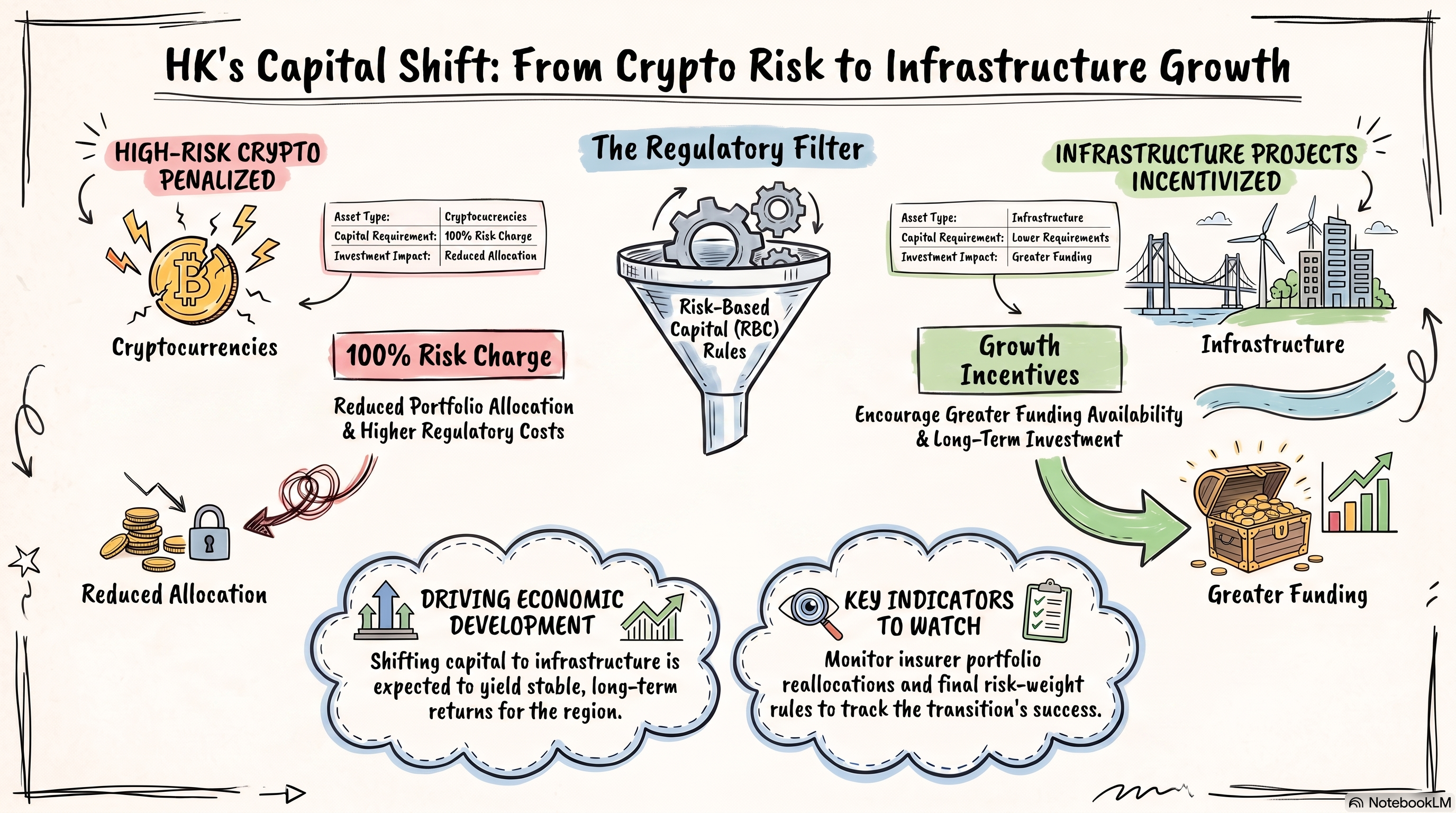
The Hong Kong Insurance Authority proposed new rules allowing insurers to invest in cryptocurrencies and infrastructure projects, with a 100% risk charge on crypto assets and risk charges on stablecoins pegged to fiat currencies.
The proposals will enter public consultation from February to April 2026, followed by potential legislative submission, targeting support for economic development and local infrastructure.
🟨 2. Affected Channels (MECHANISM)
Regulation: New capital and risk charge requirements for insurers
Financing: Incentives for channeling insurance capital into infrastructure projects
Demand: Potential increased institutional interest in digital assets and infrastructure
Sentiment: Investor and insurer response to high-risk charges on crypto
🟩 3. Malaysia Exposure (WHO)
Exposed sectors: Insurance, fintech/crypto, infrastructure financing
Company types: Malaysian insurers with cross-border Hong Kong operations, infrastructure developers seeking foreign capital, fintech platforms facilitating crypto or stablecoin investment
Geographic relevance: Malaysia’s insurers with regional exposure, cross-border infrastructure investments linked to Hong Kong
🟧 4. What to Watch (SIGNALS)
Malaysian insurers’ disclosures or announcements about cross-border investment in crypto or infrastructure
Feedback submissions from regional insurers during Hong Kong consultation
Infrastructure project fundraising tied to insurance capital from regional players
Regulatory or supervisory guidance in Malaysia aligning with or reacting to Hong Kong’s approach
1. Overview
The Hong Kong Insurance Authority (HKIA) has proposed revisions to its risk-based capital framework for insurers, introducing stricter capital requirements for crypto assets while providing capital incentives for qualifying infrastructure investments. The proposal aims to strengthen insurers' financial resilience, support regulated digital finance, and encourage long-term investment in strategic development projects.
2. Key Proposal Highlights
The proposal introduces two major policy changes:
Crypto assets: Most crypto assets will attract a 100% risk charge, substantially increasing the capital insurers must hold against these investments. Stablecoins will be risk-weighted according to the quality of their underlying fiat-backed assets, resulting in more favourable treatment than most cryptocurrencies.
Infrastructure investments: Capital incentives will be available for eligible investments in Hong Kong and Mainland China infrastructure projects, including urban development, the Northern Metropolis, technology hubs, and qualifying listed infrastructure instruments.
3. Economic and Industry Impact
The proposed framework is expected to influence insurers' investment strategies and capital allocation.
Higher capital requirements are likely to reduce direct insurer exposure to high-risk crypto assets.
Regulated stablecoins and other lower-risk digital assets may remain investable under the revised framework.
Capital incentives may increase insurer participation in infrastructure financing and long-term development projects.
Greater institutional investment could support infrastructure development while strengthening demand for long-duration assets.
4. Strategic Significance
The proposal supports Hong Kong's broader financial and economic objectives by balancing financial innovation with prudential regulation.
Key strategic outcomes include:
Strengthening financial stability through risk-based capital requirements.
Supporting the development of regulated digital finance.
Mobilising private insurance capital for strategic infrastructure projects.
Promoting long-term economic development through institutional investment.
5. Implementation Considerations
Implementation will require insurers to reassess portfolio allocation and capital management strategies.
Key considerations include:
Portfolio adjustments resulting from higher crypto capital requirements.
Identification of eligible infrastructure investments.
Regulatory developments affecting digital assets and stablecoins.
Infrastructure investment risks, including liquidity, concentration, and project execution.
6. Outlook
The proposed framework would encourage insurers to allocate capital toward lower-risk and long-term investments while maintaining a conservative approach to higher-risk digital assets. If implemented, the reforms are expected to strengthen the insurance sector's resilience, support infrastructure financing, and contribute to the continued development of Hong Kong's regulated digital finance ecosystem.
This is a much cleaner AEO/SEO structure because it uses exactly six keyword-focused H2 headings, with no unnecessary subheadings, making it easier for search engines and AI answer engines to extract information.