🟦 1. The Event (FACT)
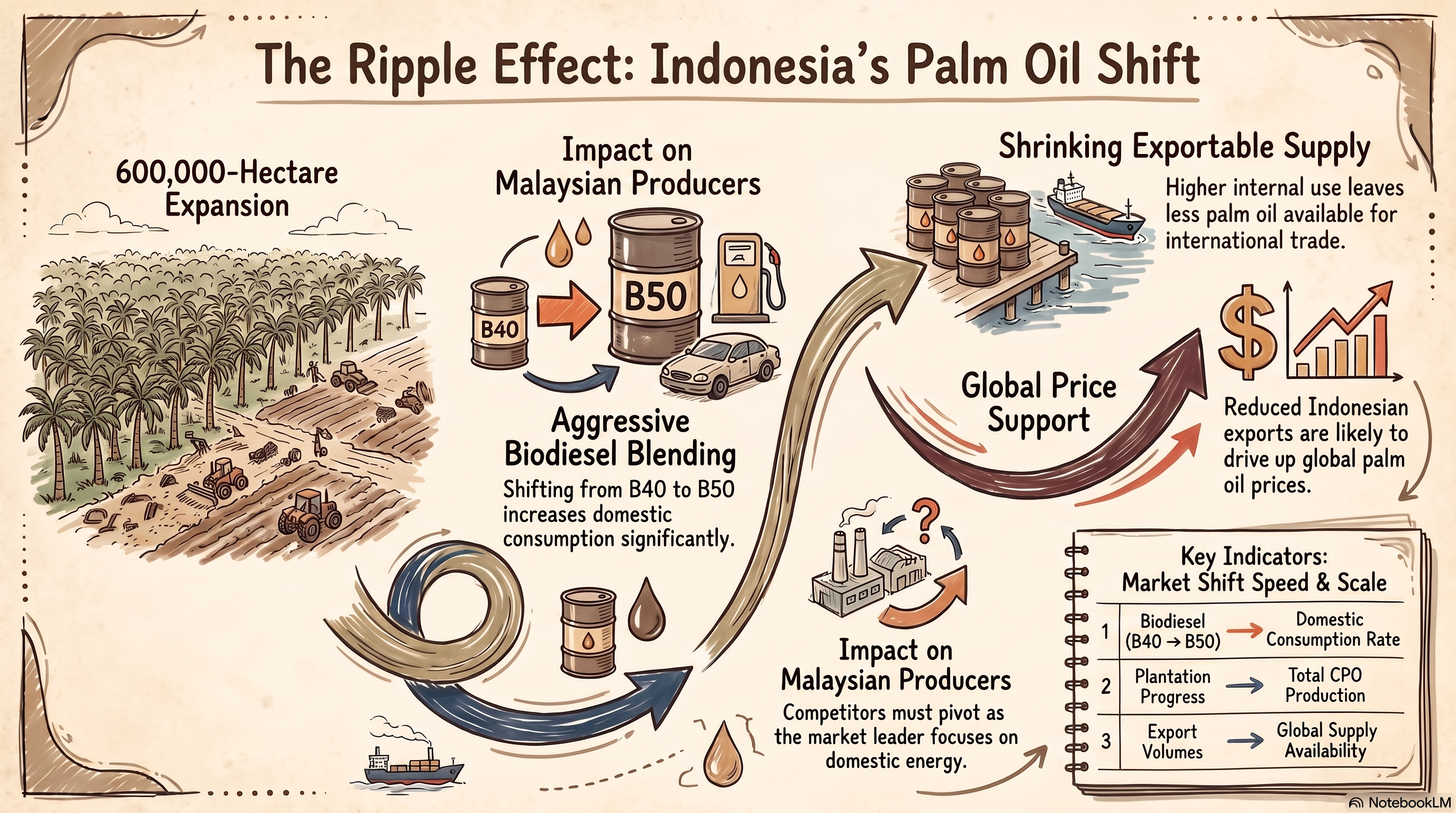
Indonesia announced plans to open 600,000 hectares of new land for palm oil cultivation over the next four years, including 400,000 hectares for smallholder “plasma” plantations.
The programme is intended to boost palm oil production for food and energy use, while the government claims it will avoid clearing forests.
🟨 2. Affected Channels (MECHANISM)
Supply: Expansion of palm oil production capacity
Cost: Smallholder and plantation development costs, potential investment incentives
Demand: Increased domestic consumption for biodiesel and food applications
Regulation: Land allocation and plantation permits; mandatory biodiesel blending targets
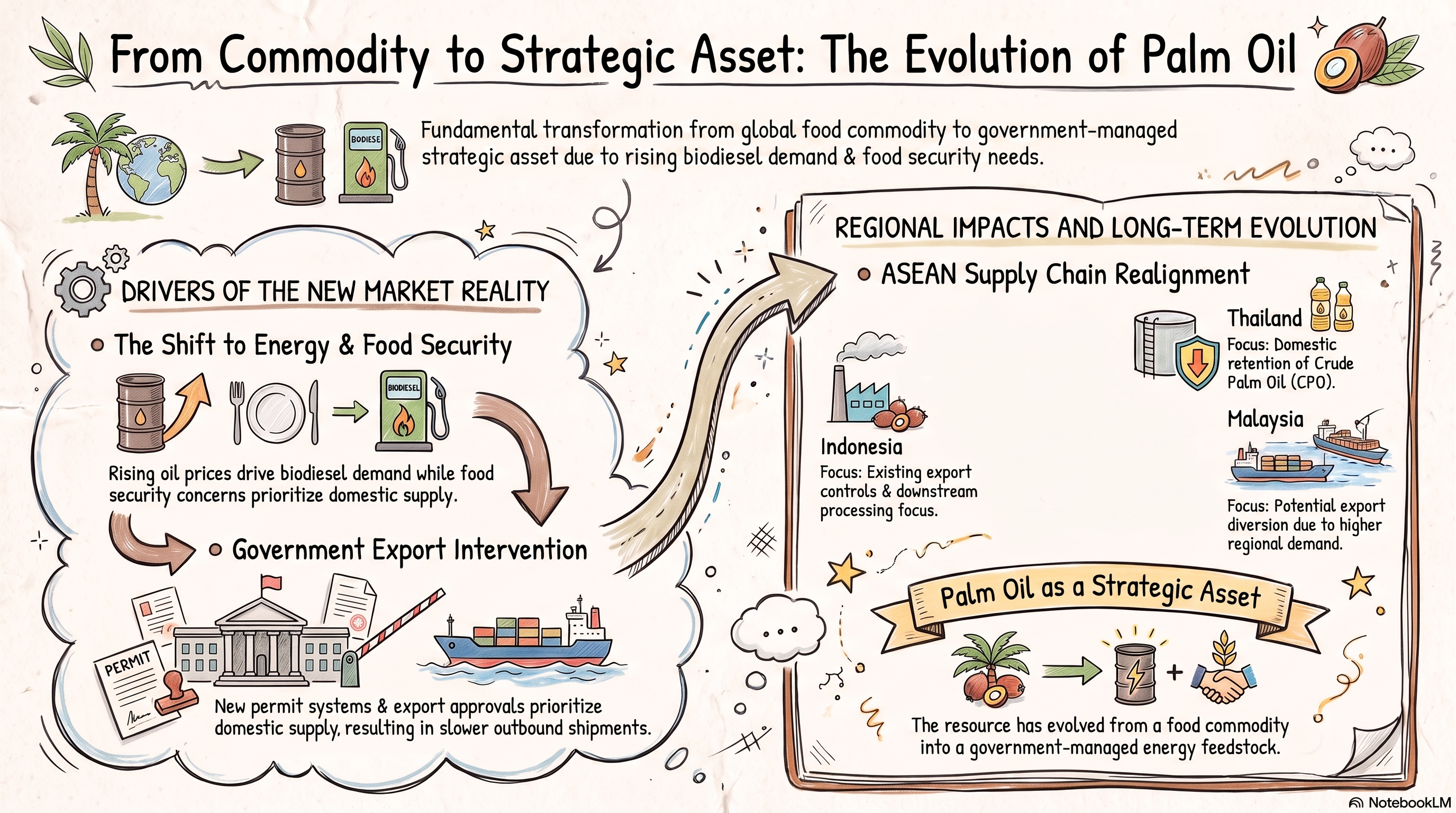
Trade / Logistics: Potential shift in exportable volumes due to higher domestic biodiesel blending
🟩 3. Malaysia Exposure (WHO)
Exposed sectors: Palm oil production, biodiesel, edible oils, downstream processing
Company types: Malaysian palm oil refiners and exporters, biodiesel producers, integrated plantation groups
Geographic relevance: National, with higher exposure in Malaysia’s export channels to Indonesia and regional biodiesel markets
🟧 4. What to Watch (SIGNALS)
Changes in palm oil export volumes from Indonesia to Malaysia
Domestic inventory levels and pricing trends for crude palm oil and refined products
Uptake of smallholder “plasma” schemes and replanting programmes
Biodiesel blending announcements and production adjustments
Corporate partnerships or investment agreements between Indonesian firms and regional players
1. Overview
Indonesia plans to expand its oil palm plantation area by 600,000 hectares over the next four years to increase crude palm oil (CPO) production, strengthen domestic food security, and support higher biodiesel consumption. The expansion will involve state-owned enterprises, private companies, and smallholder farmers, while the government maintains that the programme will not involve forest clearing. The initiative comes as palm oil yields have stagnated and domestic demand continues to grow.
2. Key Policy Measures
The expansion programme introduces several initiatives to increase palm oil production and strengthen domestic supply.
Develop 600,000 hectares of new oil palm plantations over four years.
Allocate 400,000 hectares to plasma smallholder plantations operated in partnership with plantation companies.
Assign an initial 200,000 hectares to state-owned PalmCo, with participation from private plantation companies.
Increase domestic palm oil production to support food security and biodiesel demand.
Support the planned increase in Indonesia's biodiesel blending mandate from B40 to B50.
Continue implementing the expansion while maintaining the government's commitment to avoid forest conversion.
3. Economic and Industry Impact
The expansion is expected to affect palm oil production, domestic consumption, and international vegetable oil markets.
Palm oil producers may benefit from increased plantation area, higher production capacity, and stronger domestic demand.
Smallholders may gain access to land, financing, technical support, and long-term supply partnerships through plasma plantation programmes.
Biodiesel producers may benefit from greater feedstock availability as domestic blending requirements increase.
Global palm oil markets could experience tighter export supplies if a larger share of production is directed toward domestic consumption.
Vegetable oil prices may receive support if Indonesia's exportable surplus declines while global demand remains strong.
4. Strategic Significance
The expansion supports Indonesia's long-term strategy of strengthening agricultural production, improving energy security, and enhancing the resilience of its palm oil industry.
Key strategic objectives include:
Increasing domestic crude palm oil production.
Supporting higher biodiesel blending targets.
Strengthening food and energy security.
Expanding smallholder participation in the palm oil sector.
Improving the long-term competitiveness of Indonesia's palm oil industry.
5. Implementation Considerations
The success of the expansion programme will depend on several operational, environmental, and regulatory factors.
Improving plantation productivity alongside expansion will remain important as yields have declined in recent years.
Land availability and allocation will require careful management to support the government's commitment to avoid forest clearing.
Environmental, social, and governance (ESG) considerations may influence project development, financing, and international market access.
Expansion of biodiesel consumption may reduce export availability and alter global trade flows.
Transparent implementation and effective engagement with smallholders will be important to achieving long-term production targets.
6. Outlook
Indonesia's plantation expansion programme represents a significant effort to increase palm oil production while supporting domestic food security and renewable energy policies. If successfully implemented, the initiative could strengthen long-term production capacity, support higher biodiesel consumption, and reinforce Indonesia's position as the world's largest palm oil producer. However, productivity improvements, sustainable land management, and effective implementation will remain critical to balancing economic growth with environmental and market considerations.