🟦 1. The Event (FACT)
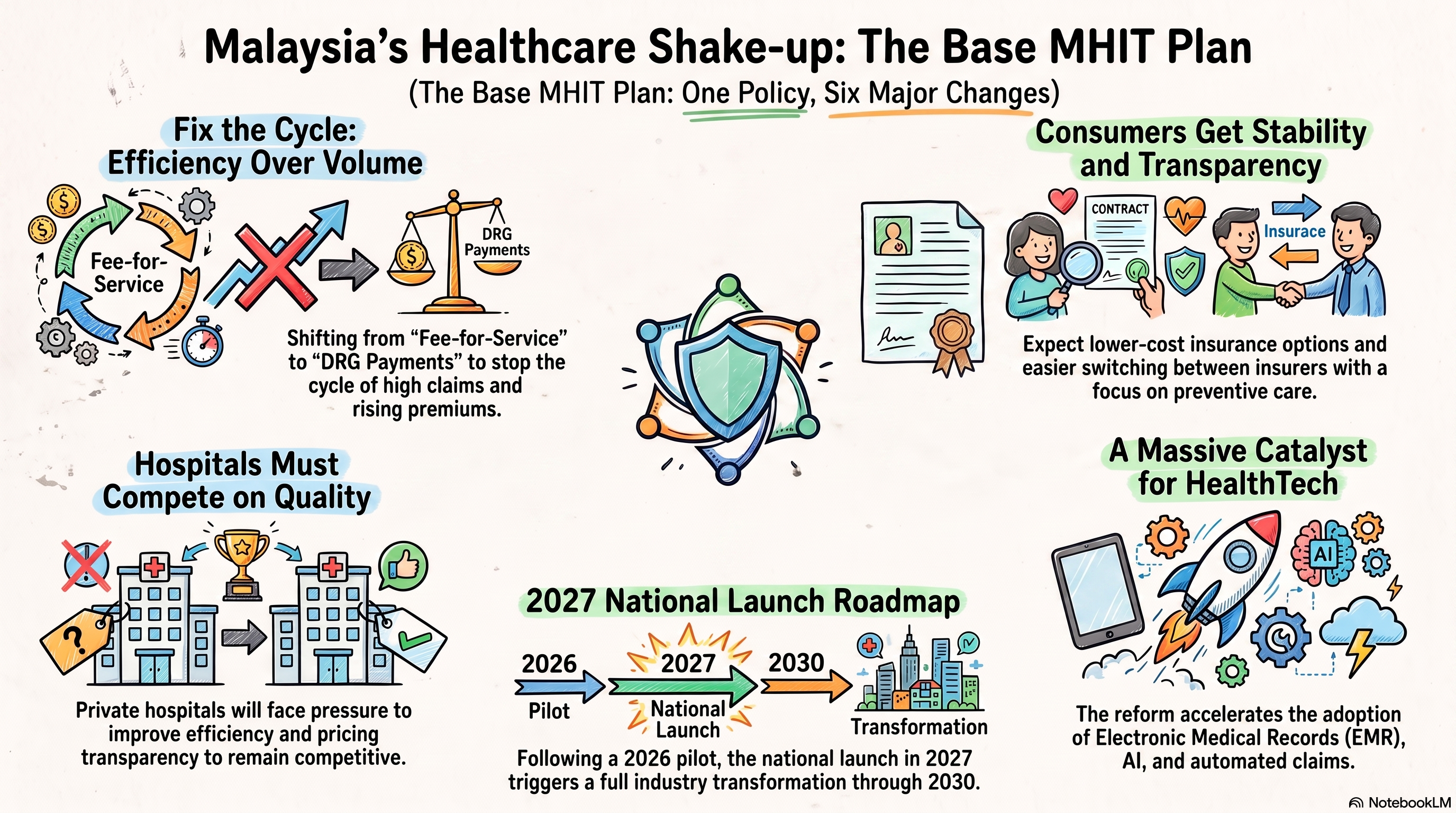
The Malaysian Ministry of Health plans to introduce a DRG (diagnosis-related group) payment system for private hospitals in 2026 via a government basic medical and health insurance/takaful (MHIT) product.
A national DRG system covering public and private hospitals is targeted for 2027, with prior preparation and technical development ongoing since 2023.
🟨 2. Affected Channels (MECHANISM)
Regulation: New reimbursement methodology and coding standards for hospitals
Cost: Standardization of payment rates may affect private hospital revenue management
Financing: Introduction of government MHIT insurance product to fund DRG reimbursements
Demand: Potential changes in utilization patterns of private healthcare services
Data Infrastructure: Development of DRG ICT system and clinical coding integration
🟩 3. Malaysia Exposure (WHO)
Exposed sectors: Private hospitals, health insurance/takaful providers, healthcare IT services
Company types: Private hospital chains, insurers offering MHIT-type products, ICT vendors for healthcare billing and coding systems
Geographic relevance: Nationwide, with early adoption in urban private hospital networks
🟧 4. What to Watch (SIGNALS)
Launch announcements and uptake metrics of the government MHIT product
Private hospital system integration and clinical coding adoption
Tendering or procurement for DRG ICT systems and related modules
Workshops, training sessions, and pilot program reports from hospitals
Updates on interoperability alignment between private sector DRG and the national system
1. Overview
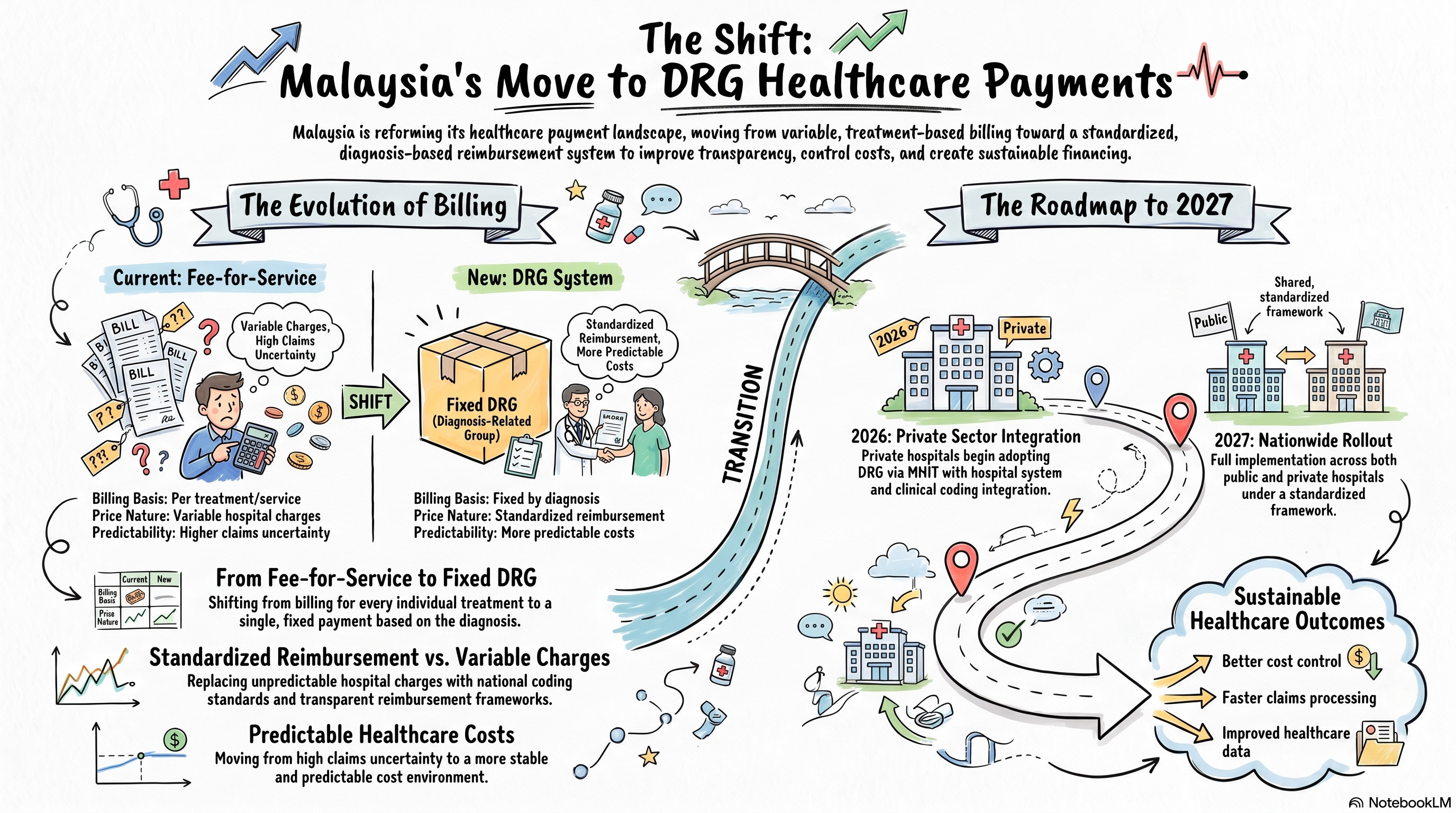
The Malaysian government will introduce a Diagnosis-Related Group (DRG) reimbursement system for private hospitals in 2026, followed by a nationwide rollout across the public healthcare system in 2027. The reform replaces traditional fee-for-service payments with activity-based reimbursement to improve cost transparency, standardise hospital payments, and contain rising healthcare costs. The private-sector implementation will serve as an intermediary phase before integration into the national DRG framework.
2. Key Policy Developments
The reform consists of two implementation phases:
2026: Launch of a DRG reimbursement model for private hospitals through the Malaysia Health Insurance/Takaful (MHIT) product.
2027: National DRG implementation covering public hospitals, university teaching hospitals, military hospitals, and the broader healthcare system.
Development milestones include:
2023–2024: Policy planning, committee formation, and technical studies.
2025: System development, clinical coding standards, and workforce training.
2026: Algorithm development, cost-setting methodology, and system integration.
2027: Pilot implementation and nationwide rollout.
The private DRG framework is designed to be interoperable with the national system to support a seamless transition.
3. Economic and Industry Impact
The DRG system is expected to reshape healthcare financing and reimbursement across the healthcare sector.
Private hospitals may experience more standardised reimbursement, improved billing transparency, and increased investment in clinical coding and hospital information systems.
Insurers and takaful operators will need to develop DRG-compatible insurance products, enhance claims management, and strengthen actuarial modelling.
Patients may benefit from greater pricing transparency, more predictable medical costs, and reduced billing disputes.
Healthcare technology providers may experience increased demand for hospital management systems, clinical coding solutions, data analytics, and system integration services.
Government may improve healthcare expenditure management through standardised payment mechanisms and more comprehensive healthcare data.
4. Strategic Significance
The DRG reform represents a structural change in Malaysia's healthcare financing model by transitioning from volume-based reimbursement to activity-based funding.
Key strategic objectives include:
Standardising hospital reimbursement across the healthcare system.
Improving transparency in medical pricing and billing.
Containing healthcare cost inflation.
Strengthening national healthcare data collection and analytics.
Supporting evidence-based healthcare funding and policy development.
Aligning Malaysia's healthcare financing framework with internationally adopted DRG reimbursement models.
5. Implementation Considerations
Successful implementation will depend on operational readiness across both the public and private healthcare sectors.
Key considerations include:
Adoption of standardised clinical coding practices.
Upgrading hospital information and claims processing systems.
Workforce training for clinical documentation and coding.
Financial adjustments for hospitals with high-cost treatment profiles.
Coordination between hospitals, insurers, and government agencies.
Continuous monitoring of healthcare quality, reimbursement accuracy, and patient outcomes.
6. Outlook
The phased introduction of the DRG reimbursement system is expected to modernise Malaysia's healthcare financing framework by improving payment standardisation, cost transparency, and expenditure management. If implemented successfully, the reform could strengthen the efficiency of hospital reimbursement, support sustainable healthcare financing, and establish a unified funding framework across both private and public healthcare systems.