When CIMB Group Holdings decided to sell the automotive financing portfolio of CIMB Thai Bank to Bank of Ayudhya, the explanation sounded simple: non-core divestment and capital optimization.
But this move says something much bigger about how banking is changing.
Thailand is one of ASEAN's biggest automotive markets. Auto financing has long been seen as a good business because it offers recurring income, a large customer base, and long-term customer relationships. So at first glance, it seems strange for a bank to exit this sector.
But the real question is not whether Thai auto finance is profitable.
The real question is whether this business is still worth the capital, time, and resources compared to other opportunities.
That changes the whole picture.
Structural Advantages Matter More Than Market Size
Thailand's auto financing industry is deeply connected to Japanese carmakers, dealer networks, and captive finance companies. Banks linked to these ecosystems have major advantages in funding costs, customer access, dealer relationships, and underwriting data.
Bank of Ayudhya, backed by Mitsubishi UFJ Financial Group, fits naturally into this ecosystem. CIMB Group Holdings does not.
This matters because modern banking is no longer just about entering large markets. It is increasingly about having a strong structural advantage inside those markets.
For many years, ASEAN banks believed regional expansion would automatically create value. But cross-border banking has proven much harder than expected. Different regulations, customer behavior, compliance systems, and technology investments make it expensive to operate across multiple countries.
Many banks eventually realized they were not building one strong ASEAN banking platform. They were managing several average-sized local businesses.
Why Capital Efficiency Is Becoming More Important
At the same time, banking economics are changing. Consumer lending now requires more regulatory capital under modern banking rules. A business can still grow loan volume while generating weak returns after considering capital costs.
This is especially true in auto finance, which needs strong collections systems, dealer management, localized underwriting, repossession capabilities, and fraud control. These businesses work best at very large scale. If a bank is not one of the leading players, profits can become less attractive over time.
The likely discussion inside CIMB Group Holdings was therefore not simply whether the Thai auto financing business was profitable. The bigger question was whether this business deserved balance sheet capacity that could be used elsewhere for higher returns.
The Banking Industry Is Entering a New Era
This reflects a bigger shift happening across the banking industry.
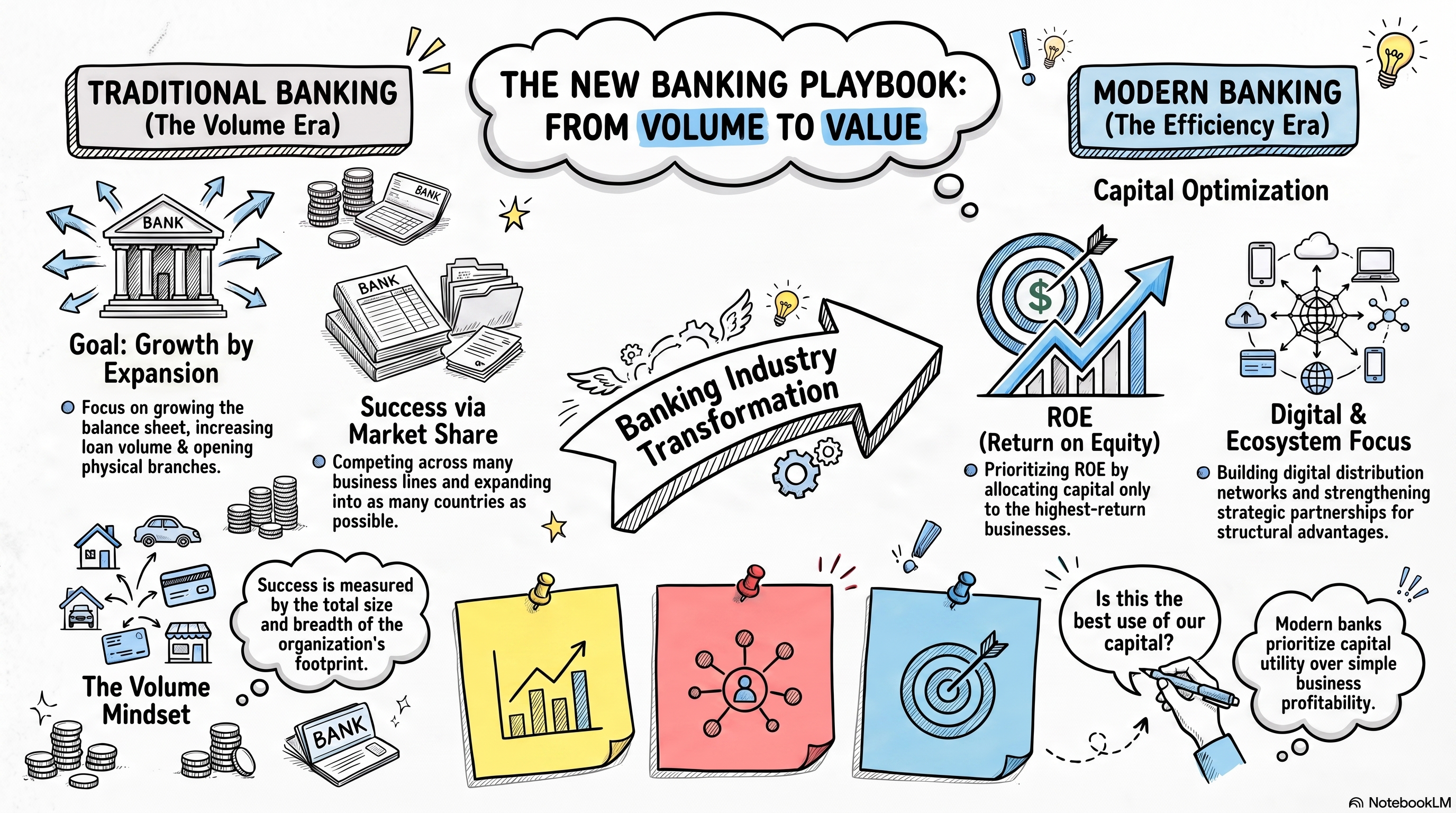
The old banking model focused on expanding into more countries, opening more branches, growing loan books, and increasing balance sheet size.
The new banking model focuses more on capital efficiency, ecosystem positioning, digital distribution, and businesses where the bank has strong competitive advantages.
That is why the market may misunderstand this move. Many people see divestments as weakness or retreat. But increasingly, these moves are about becoming more focused and disciplined.
The Bigger Lesson for ASEAN Banks
CIMB Group Holdings is probably not leaving because Thailand is unattractive. It is leaving because competing in a capital-intensive business without strong structural advantages is becoming harder to justify.
The likely winners in this environment are ecosystem-linked lenders, dominant local banks, and institutions that control customer distribution and data. The ones that may struggle are mid-sized regional banks trying to compete broadly across ASEAN without strong local advantages.
The deeper story here is not that auto finance became unattractive. It is that modern banking increasingly rewards focus, scale, and capital efficiency over regional empire building.