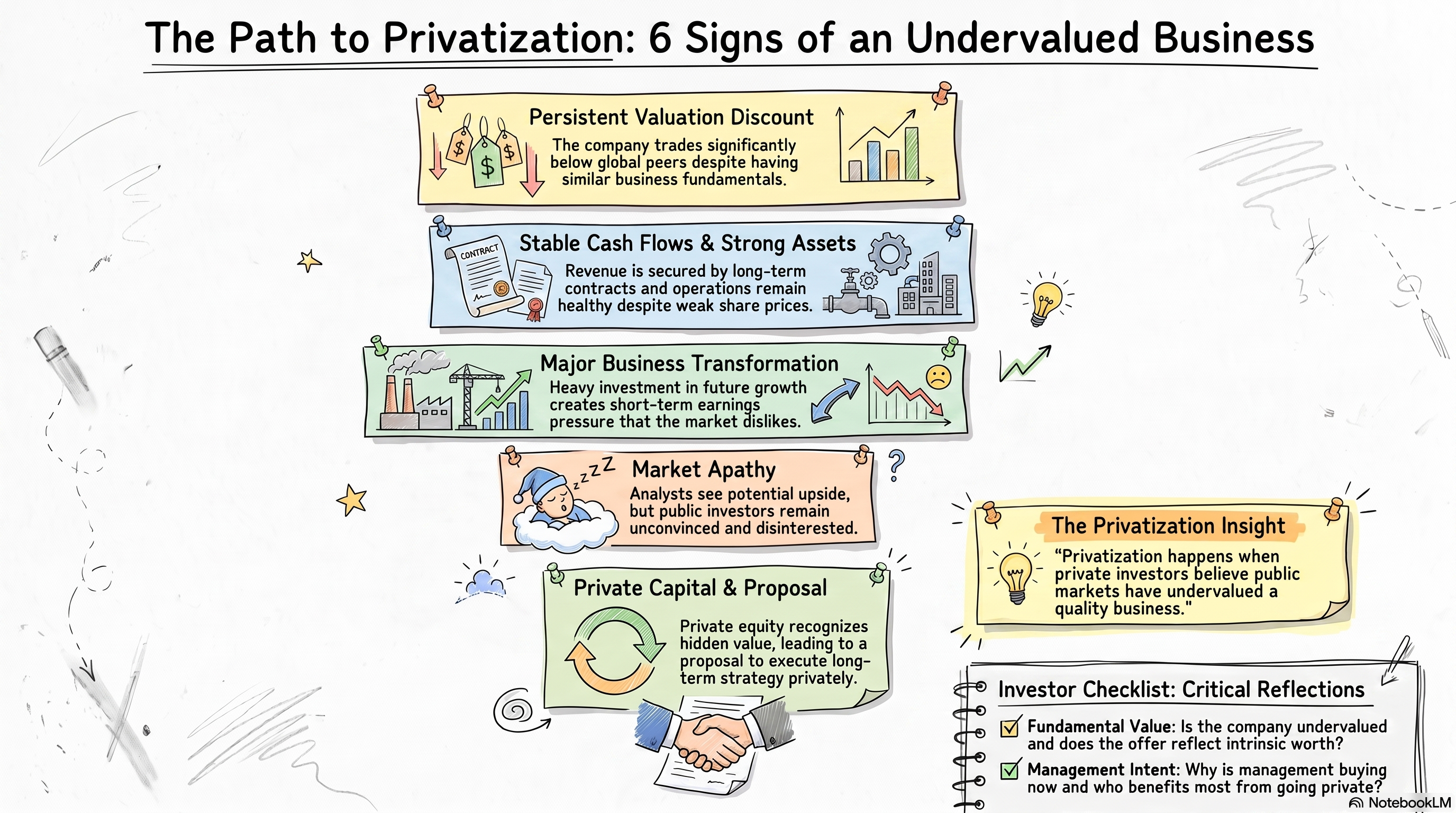
Yinson Holdings' proposed privatisation with Stonepeak Partners represents a strategic response to a persistent valuation disconnect rather than a change in business fundamentals. For several years, the company has combined long-duration contracted FPSO cash flows with an expanding energy transition platform, yet its market valuation has remained below many comparable offshore infrastructure companies.
The proposed transaction reflects management's assessment that the public market has not fully recognised the intrinsic value of its contracted asset base or its long-term growth strategy. For investors, the transaction provides an important case study of how valuation gaps can emerge when stable infrastructure cash flows coexist with capital-intensive business transformation.
Why Has Yinson Traded at a Discount?
One of the defining characteristics of Yinson's business is the visibility of its future earnings. The company's FPSO portfolio operates under long-term contracts that generate recurring revenue and predictable operating cash flows over many years. This provides a level of earnings certainty that differs significantly from businesses dependent on continually securing new projects.
Despite these characteristics, Yinson has historically traded at approximately 7× EV/EBITDA, while many global offshore infrastructure peers have been valued closer to 10× EV/EBITDA. Although valuation multiples fluctuate with market conditions, the persistence of this discount suggests investors continued to assign a higher risk premium to Yinson than to comparable infrastructure operators.
Several factors likely contributed to this outcome. Exposure to the offshore energy sector, a complex business mix spanning conventional and renewable assets, and substantial capital investment into future growth all increased the difficulty of valuing the company using conventional market comparisons.
The Challenge of Pricing a Business in Transition
Yinson is no longer solely an FPSO owner and operator. Over recent years, the company has expanded into renewable energy and other energy transition opportunities, broadening its long-term strategic positioning beyond traditional offshore infrastructure.
However, transitions of this nature rarely produce immediate financial benefits. Capital expenditure typically increases before new projects generate meaningful returns, while profitability and return metrics may temporarily soften during the investment phase. Public equity markets frequently place greater emphasis on near-term earnings than on future cash flow generation, resulting in valuation discounts during periods of strategic transformation.
For companies investing across multiple years, this creates a structural mismatch between intrinsic value and market pricing. Existing infrastructure assets continue generating contracted cash flows, while new investments remain in their development cycle. The market therefore evaluates a business that appears operationally mature while simultaneously carrying the financial characteristics of a growth company.
Why Private Ownership Changes the Equation
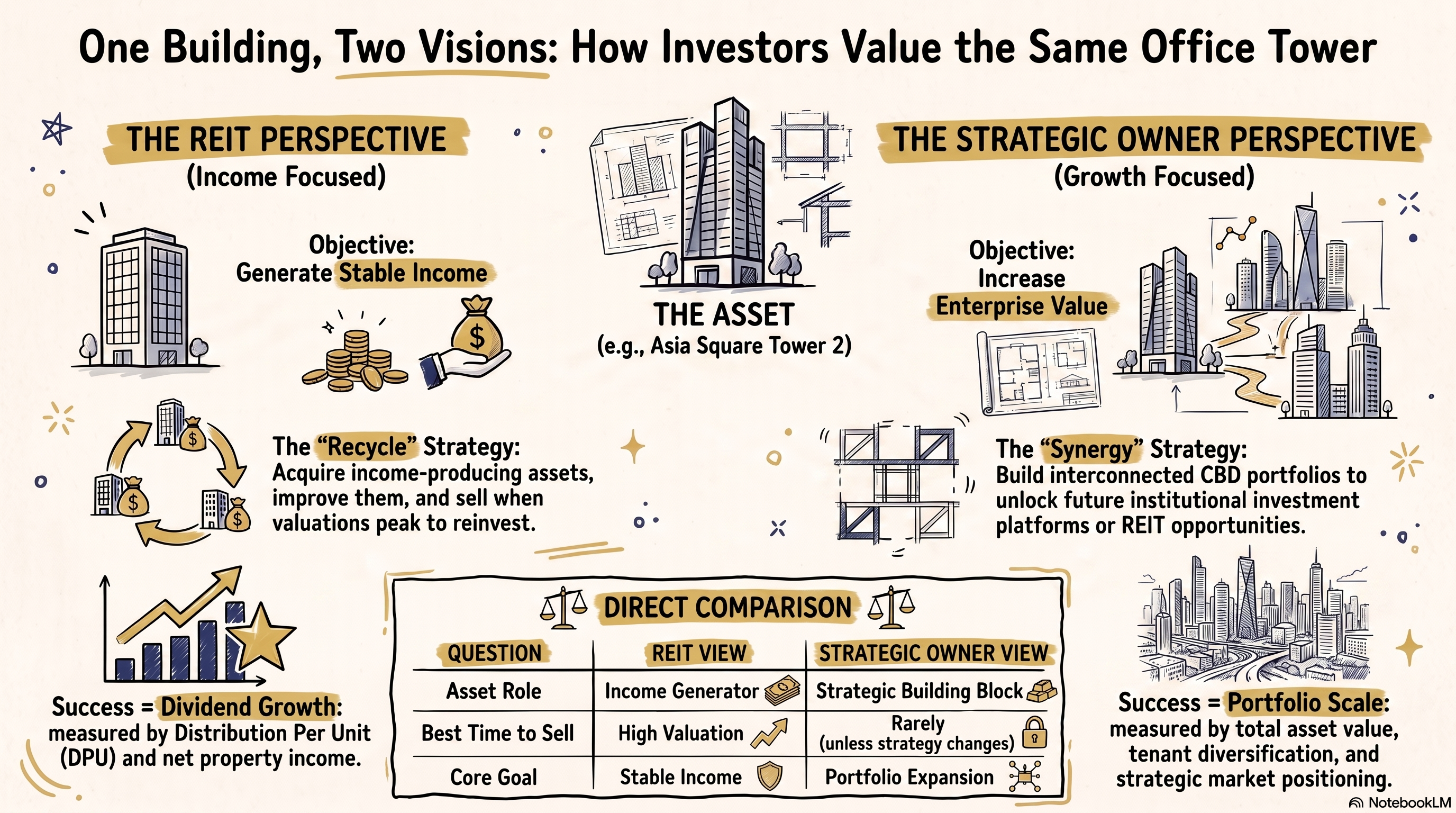
Private infrastructure investors generally evaluate businesses using a longer investment horizon than public equity markets. Their focus extends beyond quarterly earnings towards contracted cash flows, asset quality, capital allocation and long-term value creation.
From that perspective, Yinson presents several attractive characteristics: a diversified FPSO portfolio supported by long-duration contracts, recurring operating cash flows, opportunities for capital recycling, and a growing renewable energy platform. These features are typically aligned with the investment objectives of long-term infrastructure funds.
Operating as a private company also enables management to optimise capital allocation without the continual influence of short-term market expectations. Investment decisions, project development and portfolio restructuring can be assessed against multi-year value creation rather than quarterly financial performance.
What the Transaction Means for Investors
The proposed privatisation ultimately centres on valuation rather than operations. The key question for shareholders is whether the offer appropriately reflects the company's long-term intrinsic value, taking into account both its contracted offshore cash flows and its future energy transition opportunities.
For investors, the transaction highlights a broader investment principle. Businesses with predictable infrastructure earnings can remain undervalued for extended periods when market attention is focused on execution risk or transitional financial metrics. When those valuation gaps persist despite stable operating performance, long-term private capital may identify opportunities that public markets have yet to fully price.
Yinson's proposed privatisation therefore represents more than a corporate transaction. It illustrates how differences in investment horizon, valuation methodology and capital allocation philosophy can produce materially different assessments of the same underlying business.